Mera Peak Expedition | 19 October – 6 November 2026
Fifteen adventurers. Probably the strongest team I’ve ever led. A mountain we were more than capable of climbing. And a Himalayan snowstorm that had other ideas.
Sometimes you can do everything right in the mountains and still come home without the summit.
Our October–November 2026 Mera Peak Expedition was the perfect example.
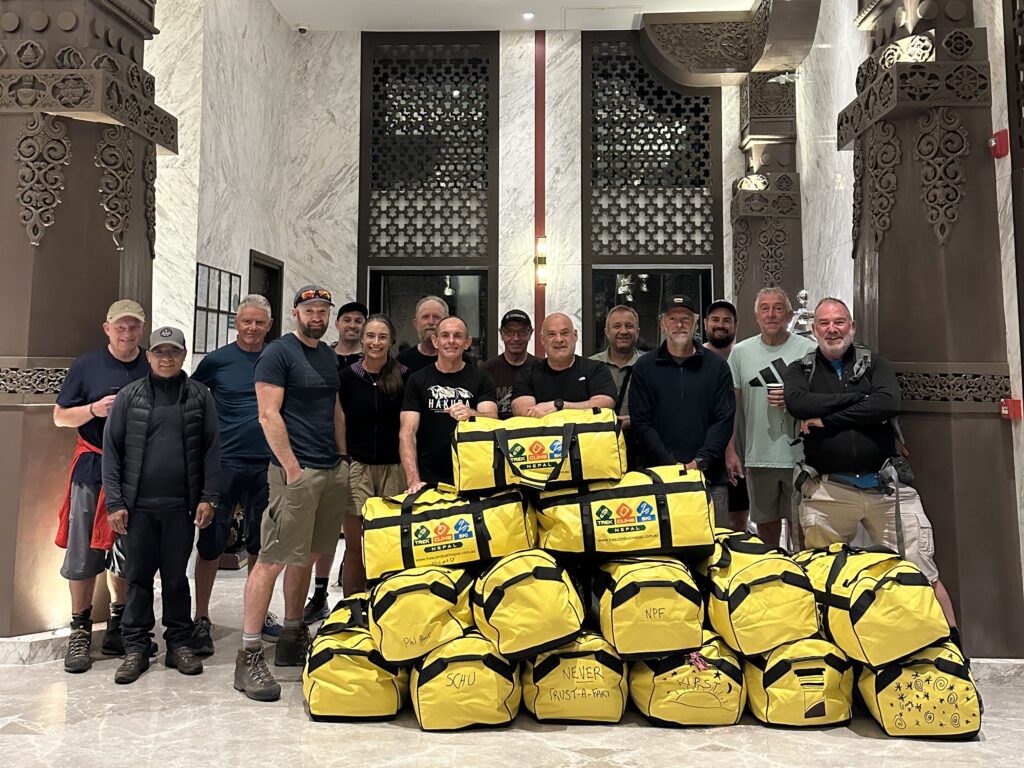
I’ve been guiding Himalayan expeditions for more than 20 years, and I can honestly say this was arguably the strongest, fittest and most capable group I’ve ever had the privilege of leading.
Fifteen wonderful individuals, an outstanding Nepalese support team and a shared ambition to climb Mera Peak at 6,461 metres.
Six of us were also hoping to ski from the summit, adding another dimension to what promised to be a fantastic adventure.
The preparation had been exceptional. The fitness was there. The enthusiasm was infectious. Our carefully planned acclimatisation program had everyone in excellent shape.
Unfortunately, the Himalayan weather gods had other ideas.
A Spectacular Beginning – Kathmandu to Lukla by Helicopter
Our adventure began on 19 October with one of the most spectacular helicopter flights imaginable, from Kathmandu to Lukla.
I’ve flown extensively throughout the Himalayas over the years, but these flights never lose their magic.
The scenery is simply breathtaking, and as we approached Lukla, the final 15–20 minutes were extraordinary. Watch the video short below and see if you agree.
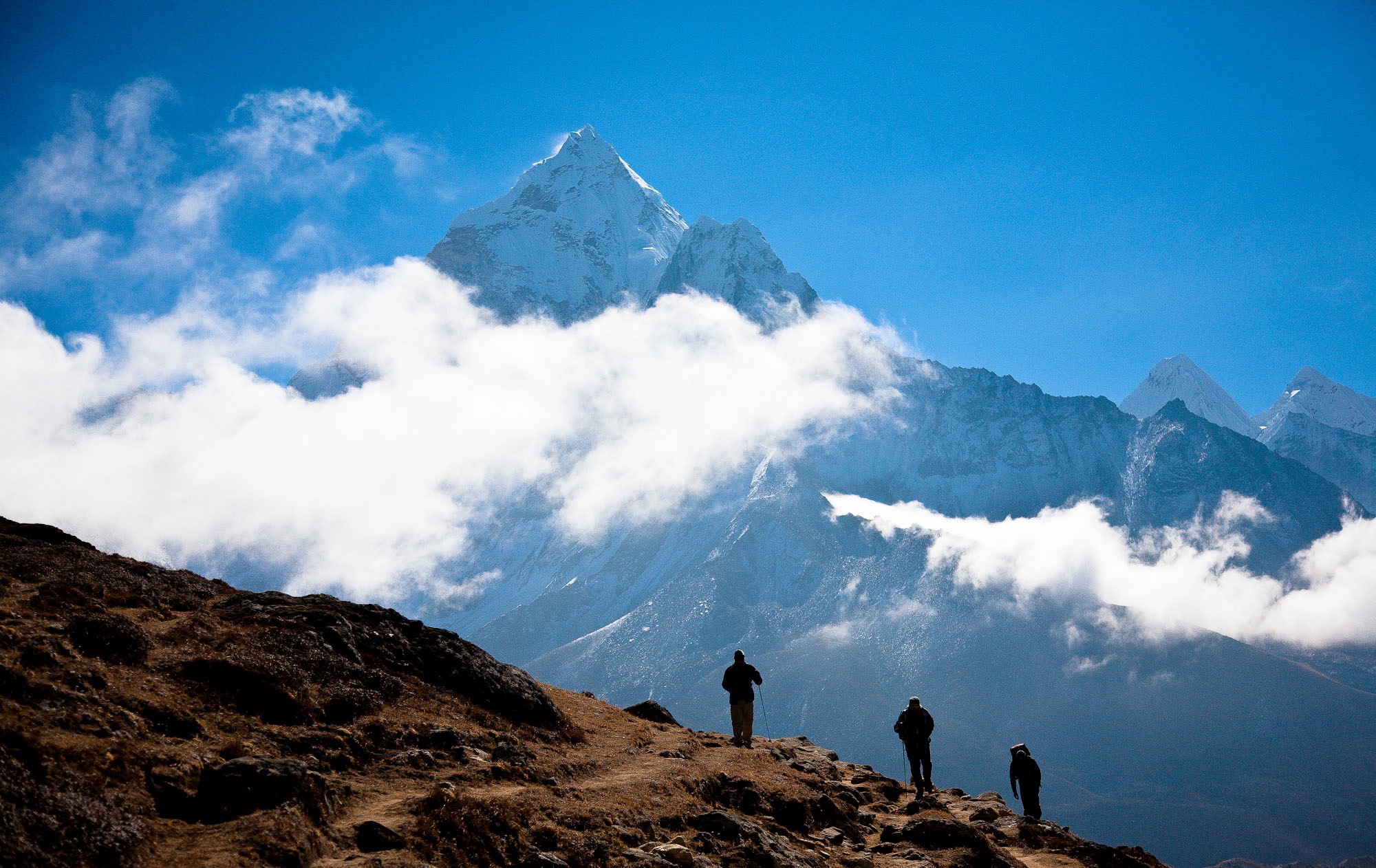
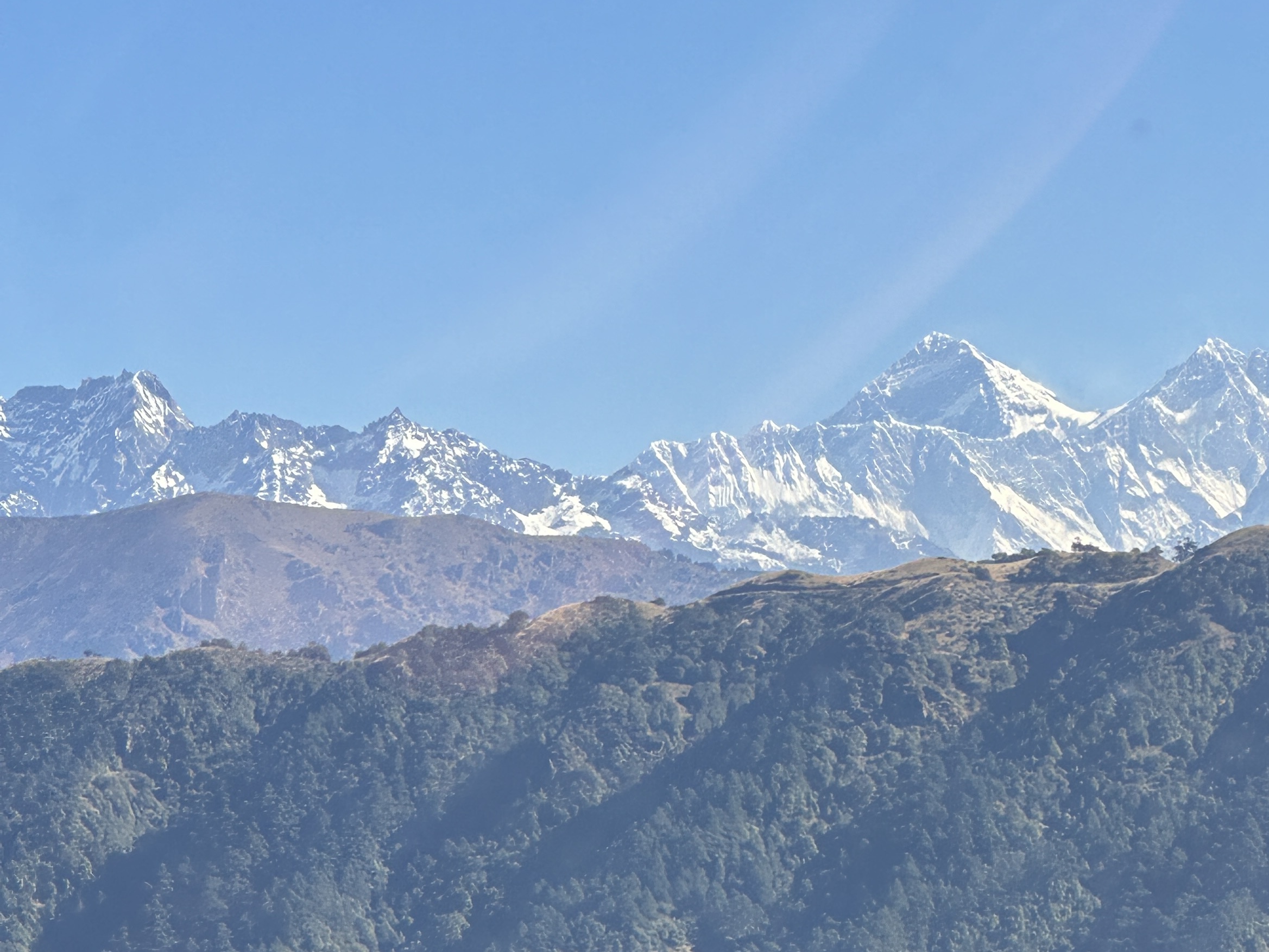
With Everest and Mera Peak clearly visible, we were treated to magnificent views of some of the highest and most spectacular mountains on the planet. Towering snow-covered peaks, deep valleys and dramatic ridgelines stretched out in every direction.
It was an exhilarating introduction to our adventure and a wonderful reminder of why we keep returning to Nepal.
After landing in Lukla, we began our initial acclimatisation trek to Namche Bazaar, where we spent two nights, including a hike to the Everest View Hotel at 3,880 metres.
This was all part of our carefully designed acclimatisation program, giving everyone the best possible opportunity to adapt to the increasingly thin air before heading towards Mera Peak.
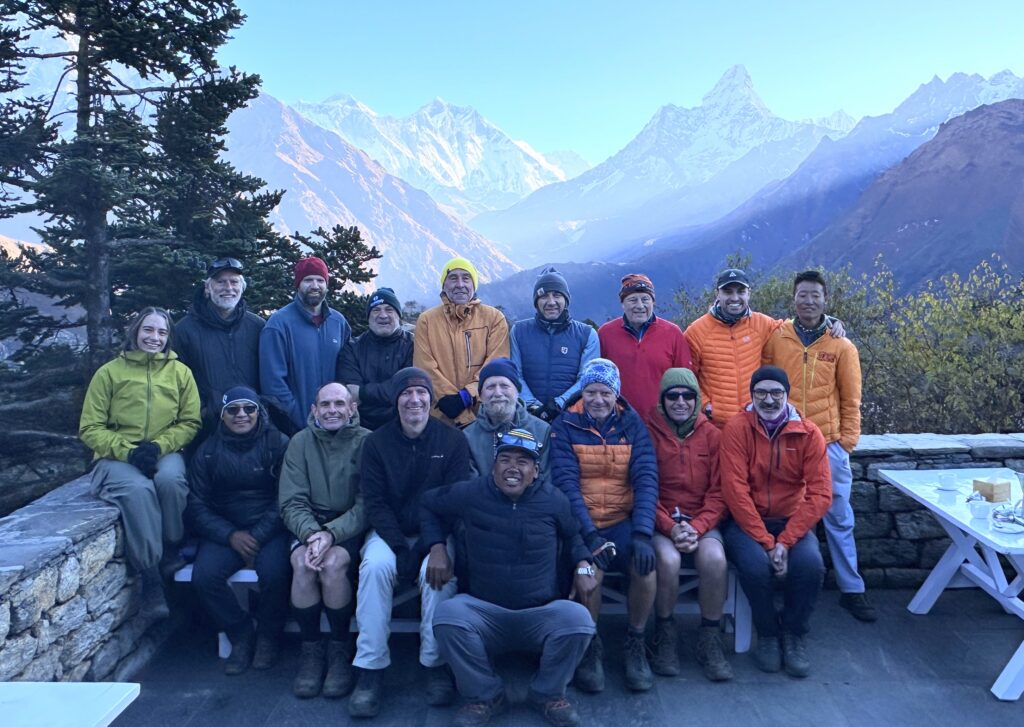
We then returned to Lukla before heading into the remote Hinku Valley, crossing the formidable Zatra La at approximately 4,700 metres, descending to Tuli Kharka and continuing through Kote and Tangnag.
There were some big days, including a demanding eight-hour return trek to Lukla and then another epic two days later over the Zatra La to Tuli Kharka, but the team continued to impress. Everyone was travelling well, recovering well and thoroughly enjoying the journey.
By the time we reached Khare at approximately 4,900 metres, the last village before Mera Peak Base Camp, I knew we had the capability to get all 15 members to the summit.
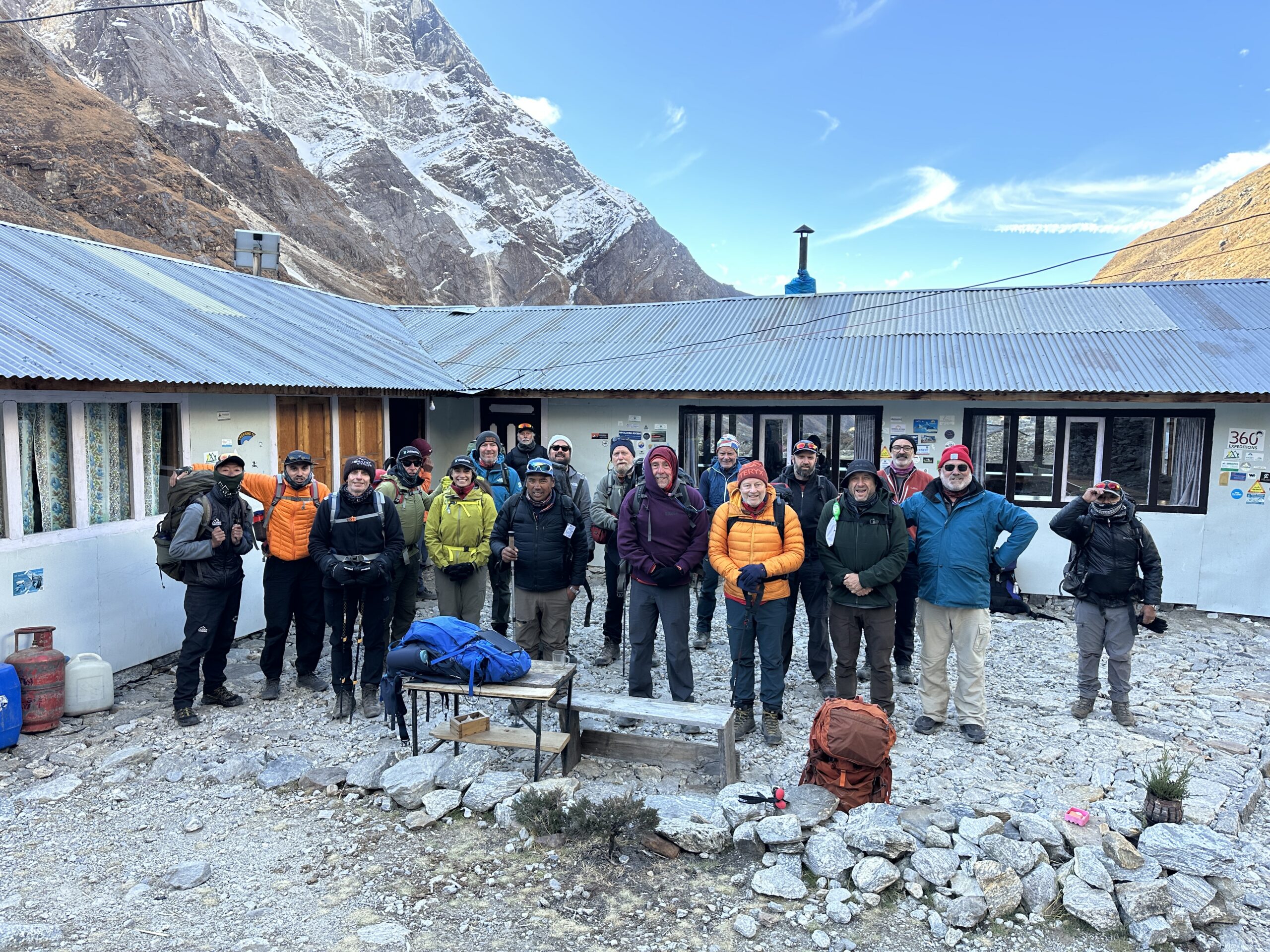
We’d done the hard work. We were acclimatised, strong and ready for the business end of the expedition.
Then everything changed.
The Snowstorm That Changed Everything
A massive three-day snowstorm descended on the region, dumping extraordinary amounts of snow and bringing climbing activities to a standstill.
Close to two metres of snow accumulated in places, and the mountain was effectively closed to climbing for approximately a week. A government imposed closure for 3 full days was also in effect.
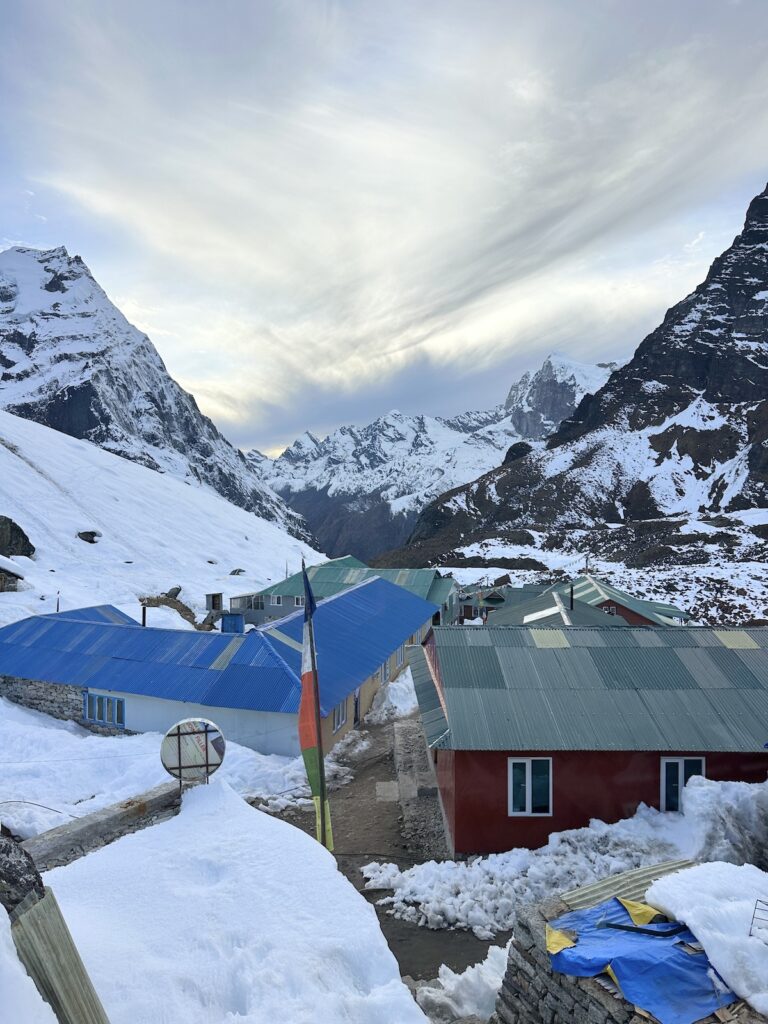
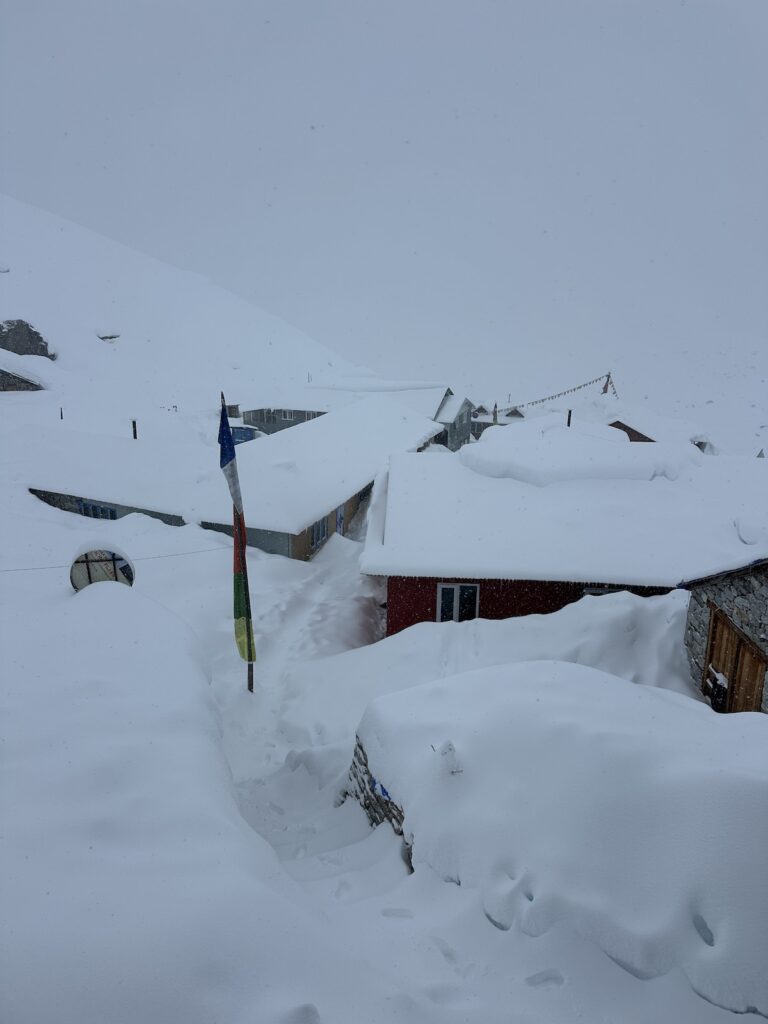
We waited, watched the weather, and hoped for an opportunity to move higher.
An additional night at Khare gave us more time, but the conditions only worsened.
Deep snow, avalanche concerns and the risks associated with moving higher made the decision unavoidable.
We were going down, not up
Frustrating is an understatement.
Had we arrived a week earlier or a week later, the outcome would have been very different. Instead, we’d landed right in the middle of the storm.
And just to rub a little salt into the wound, on 6 November, as our expedition concluded, we received word that the climbing route had reopened as far as 6,150 metres.
Sometimes the mountains can be cruel.
But there was never any question about the decision.
No summit is worth compromising the safety of our guests or our Nepalese team.
And while the mountain denied us the summit, it certainly didn’t deny us an extraordinary adventure.
Extraordinary Leadership When It Mattered Most
One of the great strengths of Trek Climb Ski Nepal is the experience of the people leading our expeditions, and this trip was no exception.
Our Nepalese expedition leader and Trek Climb Ski Nepal co-founder, TikaTamang, is an Everest summiteer and an all-round Himalayan guiding legend.
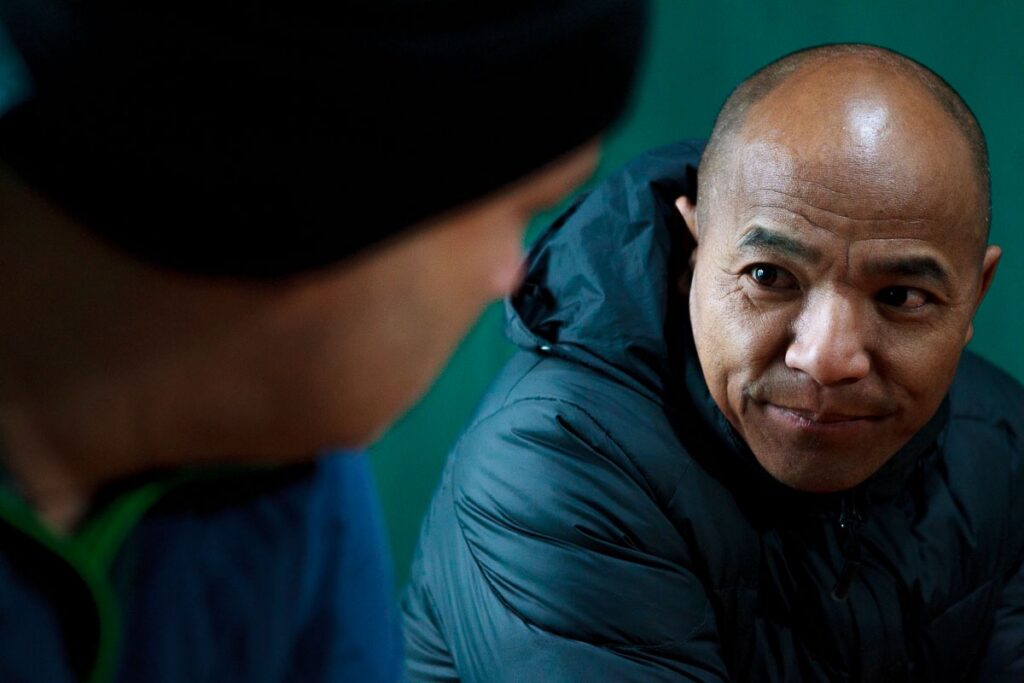
I’ve worked with Tika since 2005, and his knowledge, judgement, organisational ability and understanding of these mountains is exceptional.
Tika led the expedition and managed the logistics brilliantly, dealing with everything from helicopter movements and accommodation to the countless challenges that inevitably arise when moving a large team through remote Himalayan terrain.
I did my best to support Tika with my modest experience which does happen to include being a six-time Mera Peak summiteer – although I suspect Tika would agree that even with all that experience between us, one of us really needs to work out how to control the Himalayan weather 🤔
But perhaps the most extraordinary individual performance of the entire expedition came from our head guide, Lakpa Sherpa.
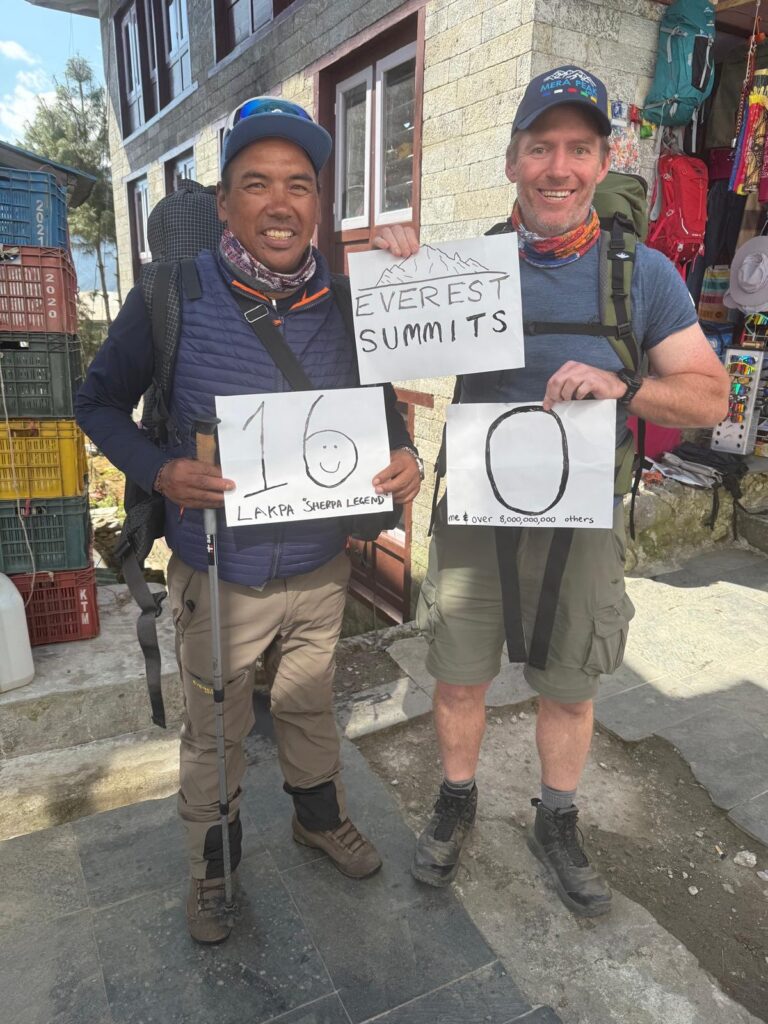
A 16-time Everest summiter, Lakpa is someone I’ve written about previously in my book, Life’s Tough, Be Tougher.
He continually inspires me with a level of tenacity, strength and determination that, quite frankly, eludes even some of the most capable Sherpa mountaineers I’ve worked with.
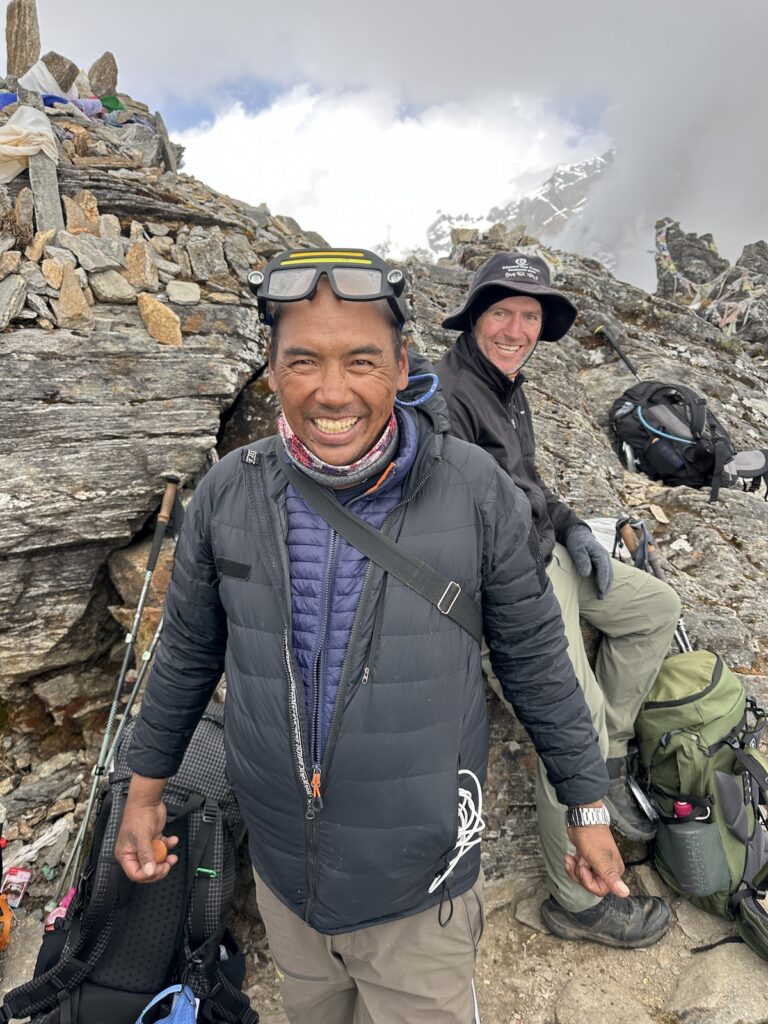
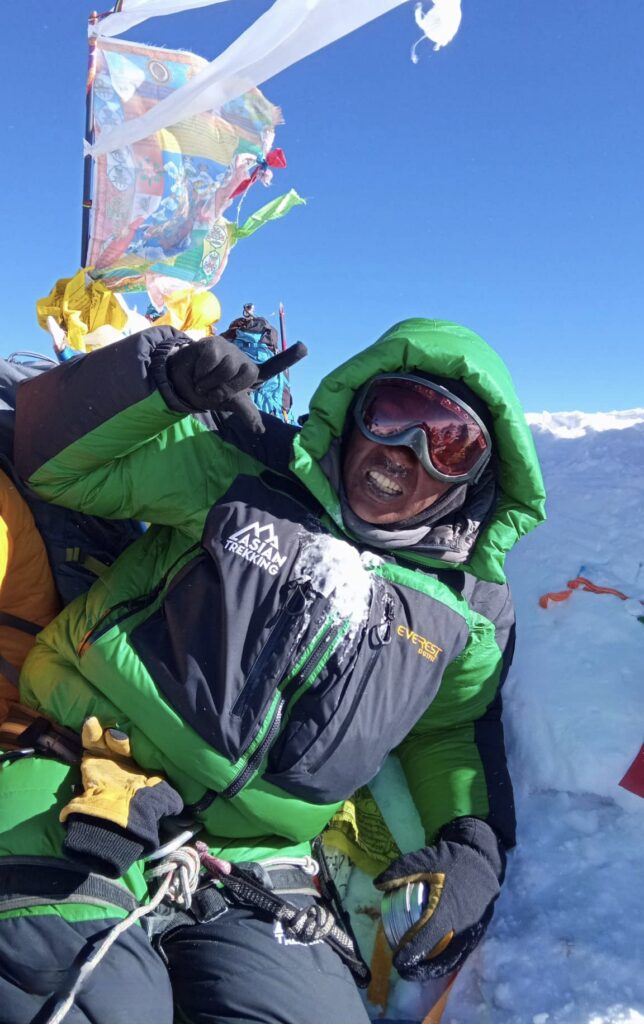
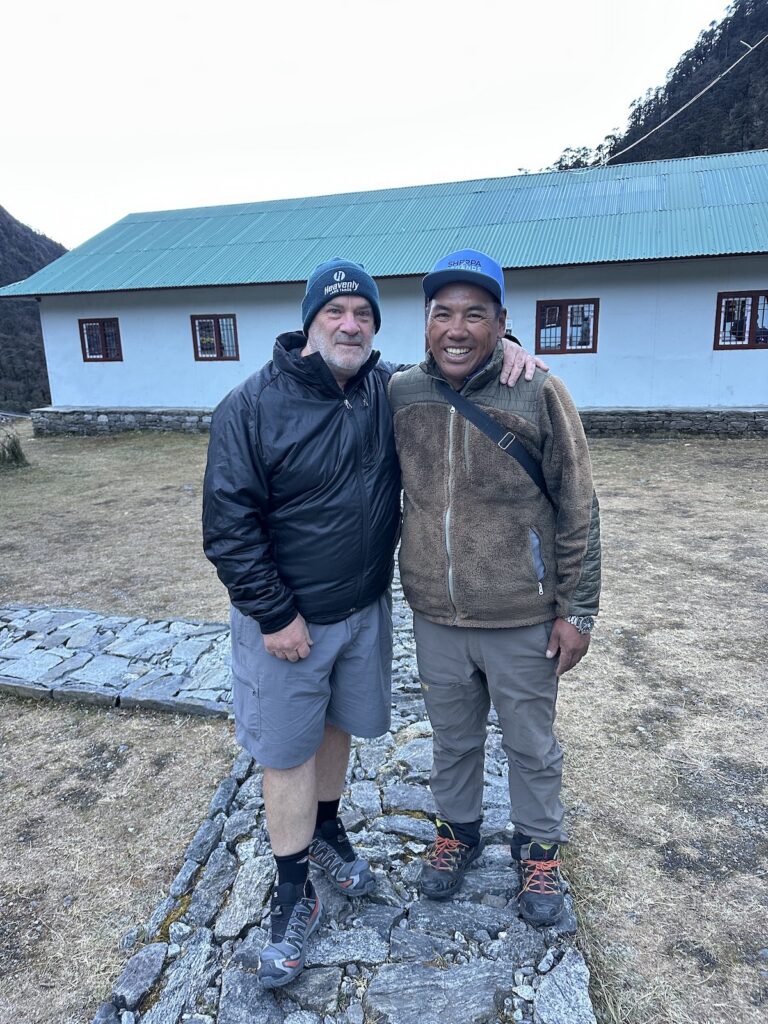
Lakpa is next level.
And on this expedition, he demonstrated it once more.
When the time came to descend from Khare to Tangnag, the snow was deep, the conditions were difficult and virtually nobody was moving.
Expeditions were sitting tight, understandably reluctant to tackle the enormous task of breaking trail through the freshly fallen snow – nearly 2 metres in total.
But Lakpa simply got on with it.
He moved to the front of our group and began the exhausting process of forcing a route through the snow, step after step, creating a trail where none existed.
It was an extraordinary display of strength, endurance and determination.
And then something remarkable happened.
As our team began making progress, another expedition fell in behind us.
Then another.
And another.
Before long, three or four other expedition groups were following in our footsteps, taking advantage of the trail Lakpa was forging through the snow.
While others waited, Lakpa led.
Watching Lakpa at work is genuinely inspiring.
This wasn’t simply a matter of being fit or strong. It was the product of extraordinary mountain experience, resilience and a willingness to take on the hardest job when everyone else was understandably reluctant.
I’ve worked alongside some exceptional Sherpa mountaineers over the years, but Lakpa continues to set a standard that very few can match.
Sixteen Everest summits tell you something about the man.
Watching him break trail through deep Himalayan snow, with several expeditions following in his wake, tells you even more.
To Tika, Lakpa and our entire Nepalese team of guides and porters, thank you.
Your professionalism, friendship, extraordinary work ethic and commitment to everyone’s safety were outstanding.
You are the people who make these adventures possible.
A Spectacular Himalayan Finale – Kote to Kathmandu by Helicopter
Although the mountain had denied us the summit, there was still one magnificent experience waiting for us.
Our return helicopter flight from Kote to Kathmandu.
And what a way to finish an expedition.
The flight was every bit as exhilarating as our journey into Lukla, taking us high above the spectacular Himalayan landscape we’d spent the previous two weeks exploring on foot.
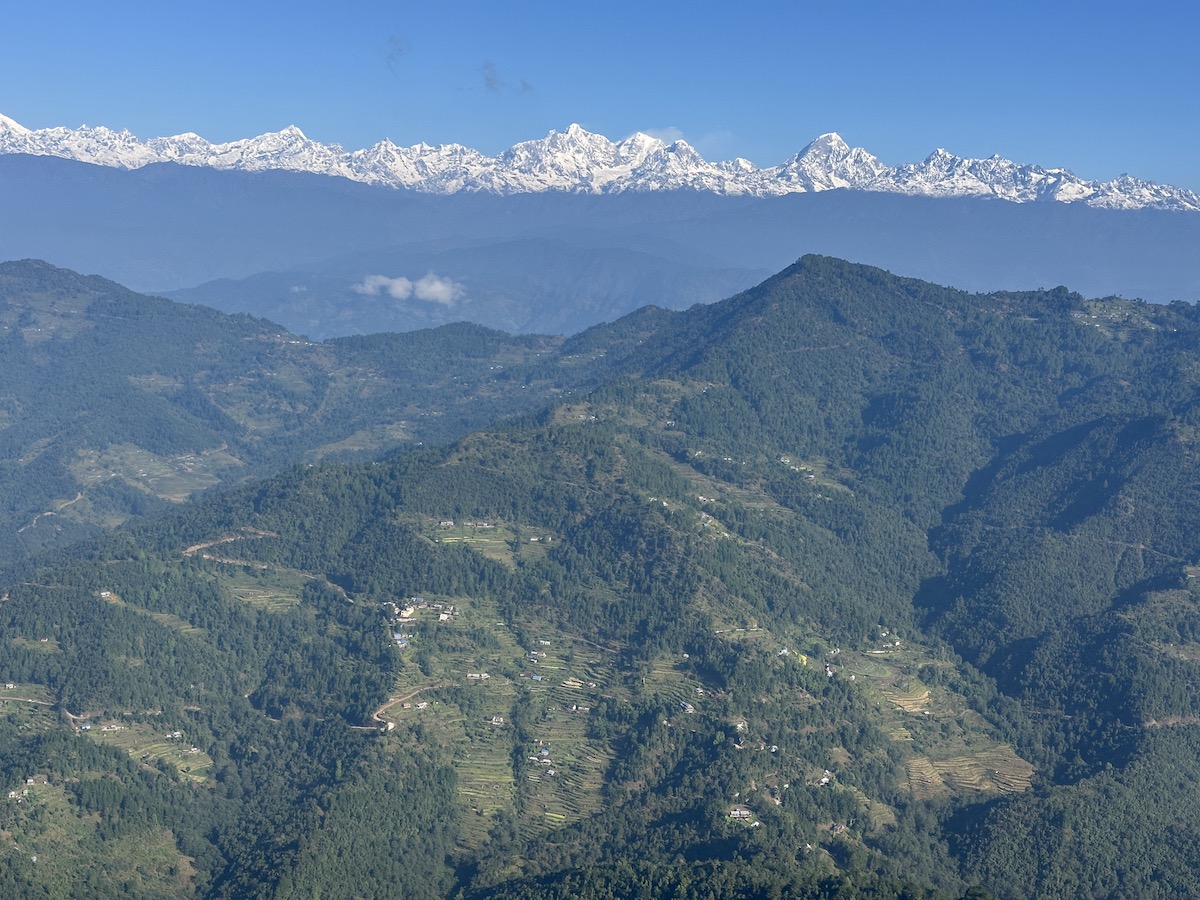
From the air, the scale of these mountains is impossible to comprehend. Enormous snow-covered peaks, deep valleys, rugged ridgelines and remote settlements unfolded beneath us as we made our way back towards Kathmandu.
Having just spent days trekking through this extraordinary terrain, there was something particularly special about seeing it all from above.
The contrast was remarkable. Places that had taken us hours, sometimes an entire day, to reach on foot passed beneath us in minutes.
It was a spectacular reminder of just how vast and rugged the Himalayas really are.
I’ve experienced some extraordinary helicopter flights over the years, but I genuinely believe the flights between Kathmandu, Lukla and Kote rank among the most scenic and exhilarating you could experience anywhere in the world.
And while we might have missed out on standing on the summit of Mera Peak, these two unforgettable flights were certainly highlights of the expedition.
Not a bad way to begin and end a Himalayan adventure.
Fifteen Characters Who Made thIS MERA PEAK Expedition Unforgettable
Of course, an expedition is about far more than mountains, weather and altitude.
It’s about the people.
And this particular group had characters in abundance.
Team Nordern – A Family Affair
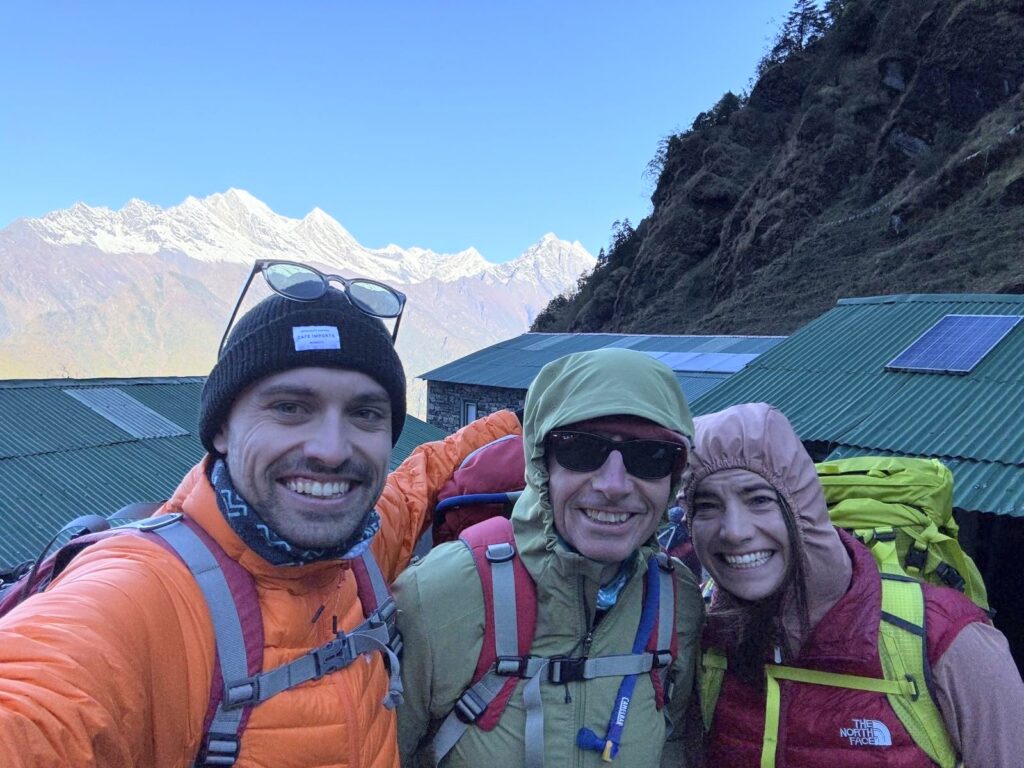
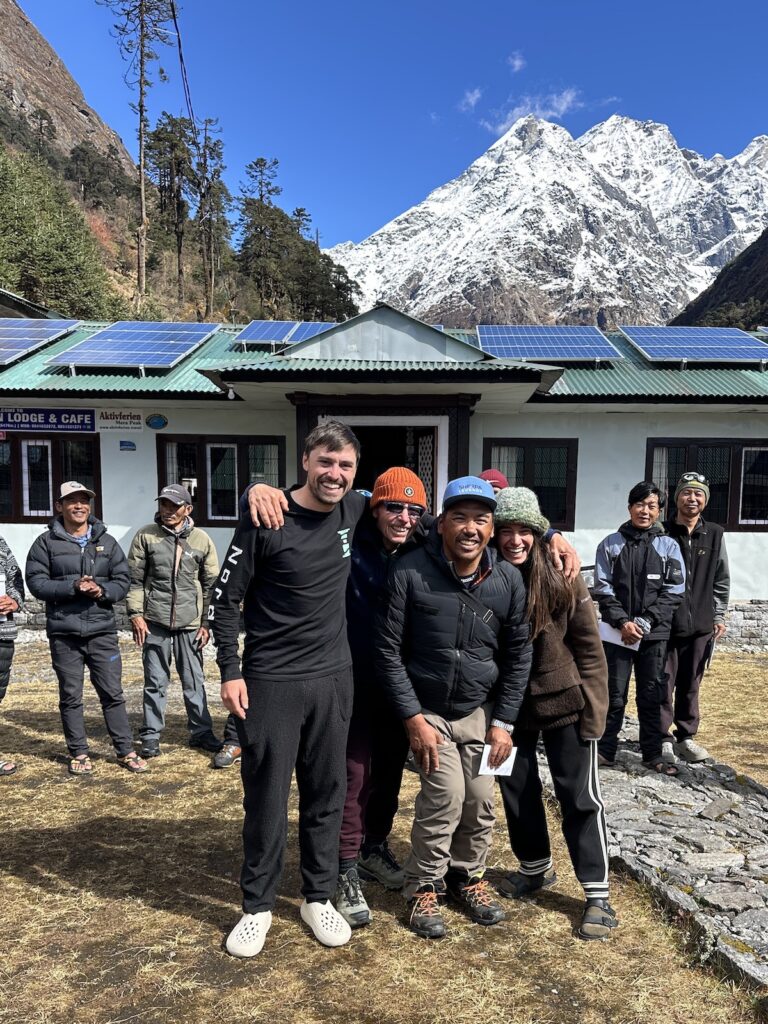
Greg, Nicholas and Kirsten Nordern are legends.
Greg, who had previously trekked to Everest Base Camp with his son Nick and Trek Climb Ski Nepal in 2017, returned to Nepal hoping to go even higher.
His relentless positivity, infectious laugh and seemingly limitless optimism made him a constant joy to have around. Even when things weren’t going to plan, Greg could find something to smile about.
His son Nick was equally fit and cheerful, but with one particular obsession – coffee.
For Nick, coffee isn’t simply a beverage. It’s a science, an institution and possibly a religion.
Armed with his own supplies, he brought a level of coffee sophistication rarely encountered at 5,000 metres. Unfortunately, we couldn’t let him loose on some of the coffee machines we encountered along the way.
Then there was Kirsten, affectionately known as “Kiten”, a nickname born from a Nepalese worker creatively misspelling her name on a rental sleeping bag.
Our only female team member, Kiten brought warmth, wisdom, laughter and a wonderful sense of humour to the group.
But with her family members, she also developed an entertaining habit when it came to mealtimes.
Despite the enormous amount of energy we were burning each day, Kiten and Team Nordern regularly struggled to finish their meals. Rather than let perfectly good food go to waste, she’d invariably attempt to offload the remainder onto someone else – often me and whoever I was sitting with.
I’d be happily working my way through my own meal when another plate would suddenly appear, accompanied Team Nordern’s hopeful suggestion that I might like to finish theirs as well.
If I wasn’t interested, she’d simply move on to the next potential recipient.
Kiten and Team Nordern effectively operating their own informal meal redistribution service.
A wonderful character, always ready with a laugh, and someone who contributed enormously to the spirit of the team.
Darren “Dazzler” Holroyd – Calm, Collected and Short of Underwear
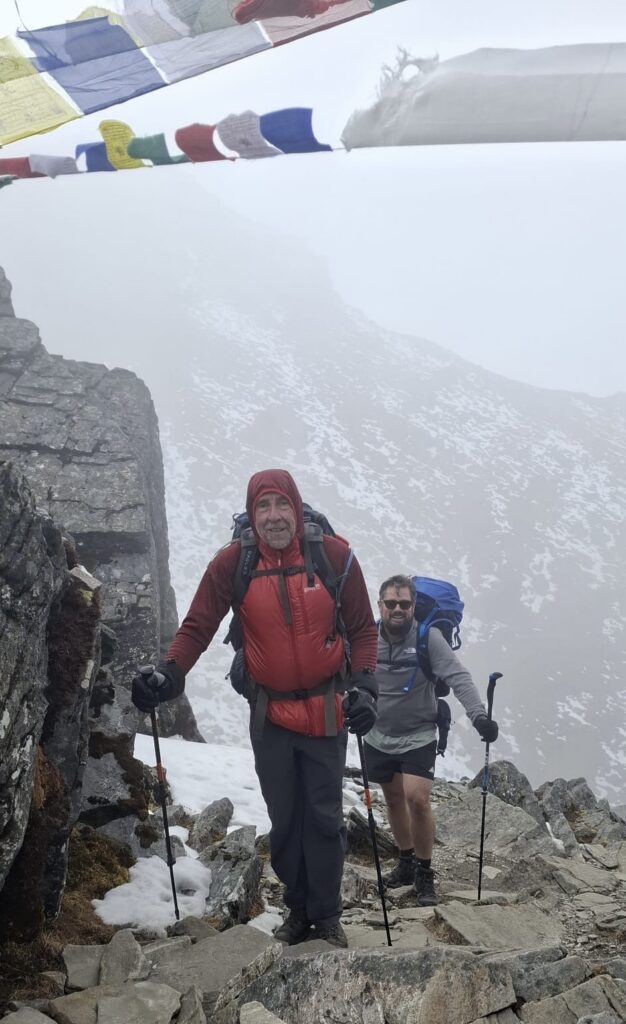
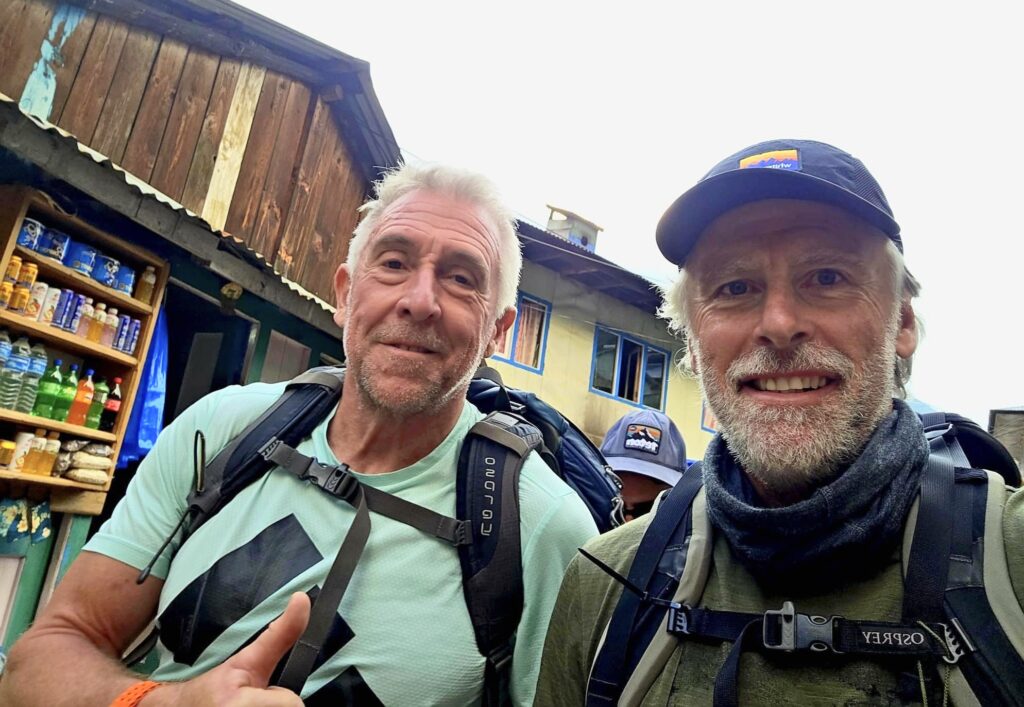
Dazzler was our calm and reassuring voice, always measured, positive and quietly determined.
A passionate skier, he desperately wanted to climb higher, both for the magnificent views of Everest and the possibility of skiing from Mera Peak.
Unfortunately, the snowstorm put an end to those ambitions, although we’re fairly certain Dazzler will be back.
He also managed to run dangerously low on socks, jocks and shirts, prompting a substantial shopping expedition in Lukla, where he purchased another seven pairs of each.
In a lovely gesture, he donated these additional supplies to our porter team at the conclusion of the trip – washed of course.
Dazzler also formed half of what should have been a formidable 500 card-playing partnership with Tim Bates.
Unfortunately for them, they were comprehensively outplayed by a newcomer to the game -Tom Isaac – and yours truly who hadn’t played 500 for many years.
A generous bloke, a terrific expedition companion and, despite the card-playing setback, a man who never lost his sense of humour.
Tom Isaac – From Himalayan Ski Slopes to the Music Stage
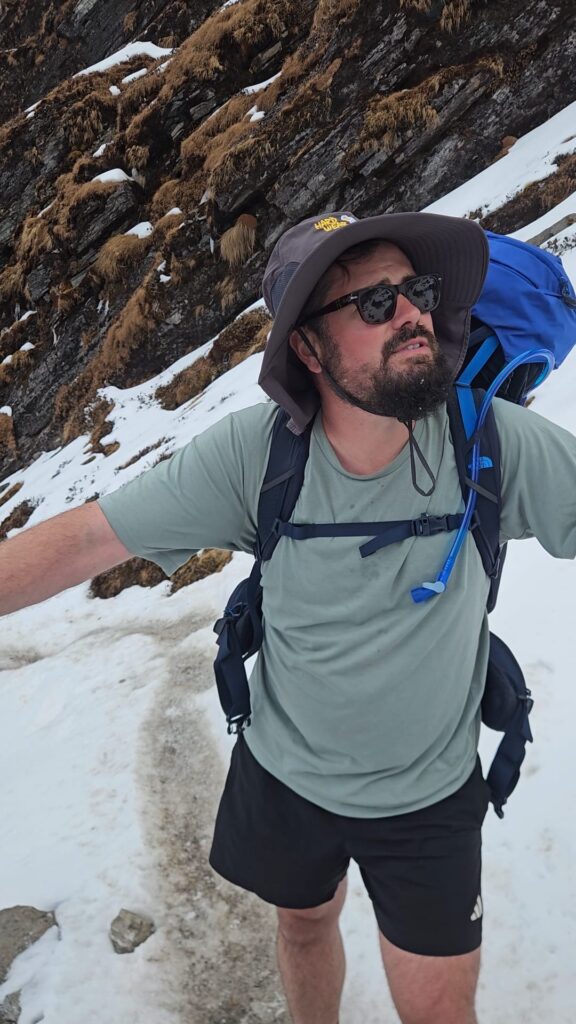
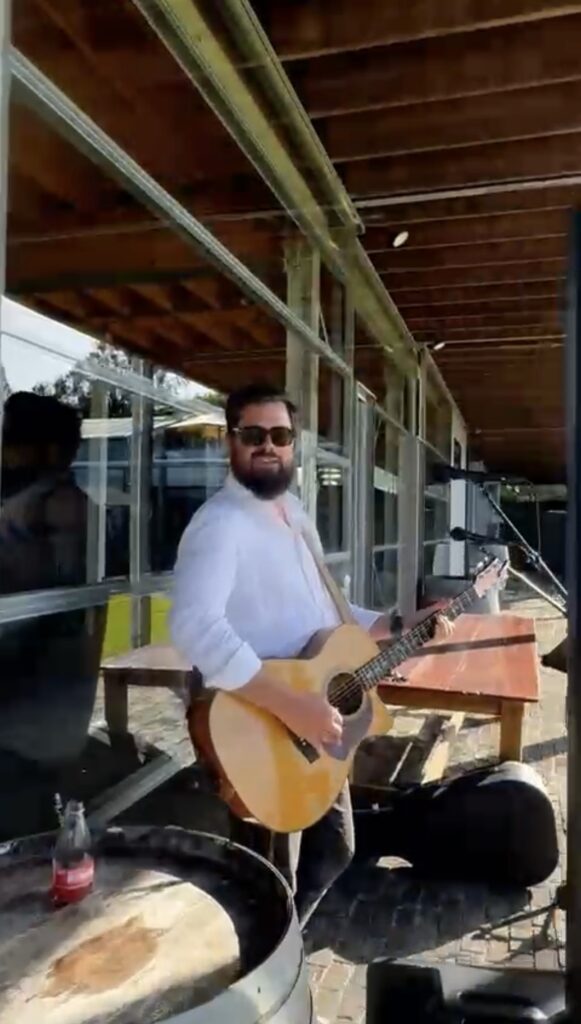
Tom, our skiing musician, brought plenty of entertainment to the expedition and, as it turned out, some impressive card-playing ability.
Teaming up with yours truly, he became a first-time champion of the great card game 500.
Our partnership proved simply too strong for the supposedly experienced pairing of Dazzler and Tim Bates, both longtime players who really should have known better!
Tom was also one of our keen skiers, and while the snowstorm put an end to our dreams of skiing from the summit of Mera Peak, he wasn’t about to leave the Himalayas without making a few turns.
On our retreat from Khare, Tom clicked into his skis and joined the small group who managed to ski almost halfway down towards Tangnag.
Not quite the 6,476-metre summit descent we’d been dreaming of, but a memorable Himalayan skiing experience nonetheless!
And if anyone thought Tom might need a little recovery time after nearly three weeks trekking through the Himalayas, think again.
He’d barely arrived home in Australia before he was heading off to play a gig that very same afternoon!
Three weeks of Himalayan trekking, high altitude and snowstorms clearly weren’t enough to slow him down.
Straight off the mountain and back onto the stage is smooth work.
A terrific bloke, a talented musician and a great expedition companion who certainly knows how to pack plenty into life.
Tim Bates – Top Five Albums and a pants-down Pool Performance
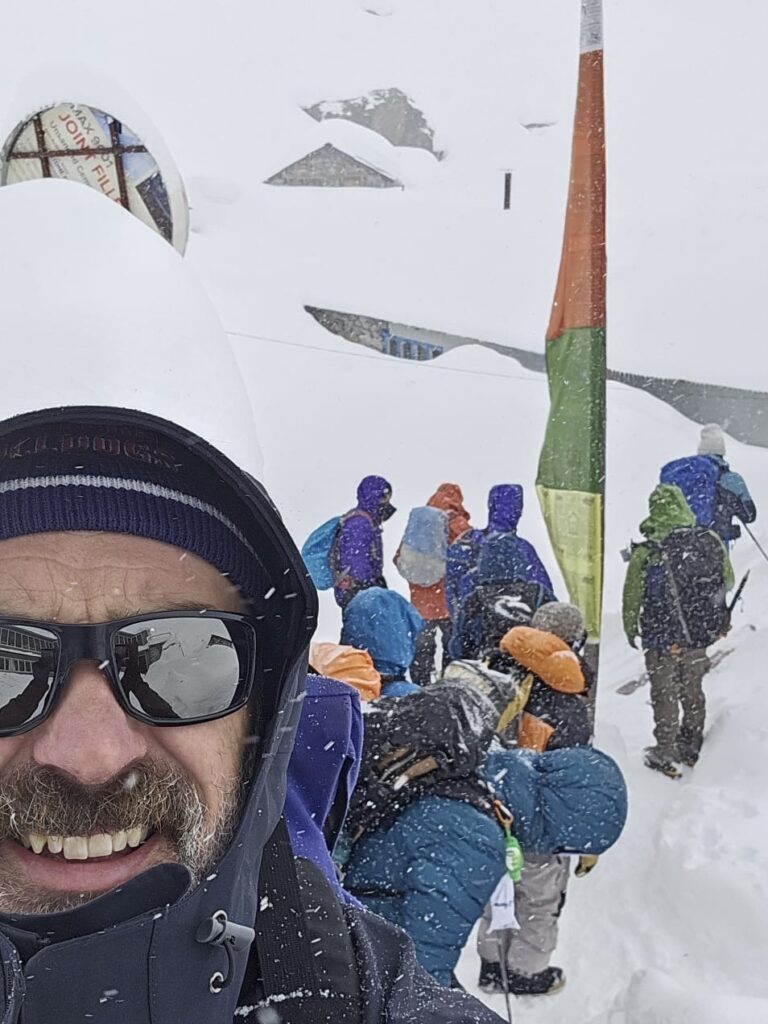
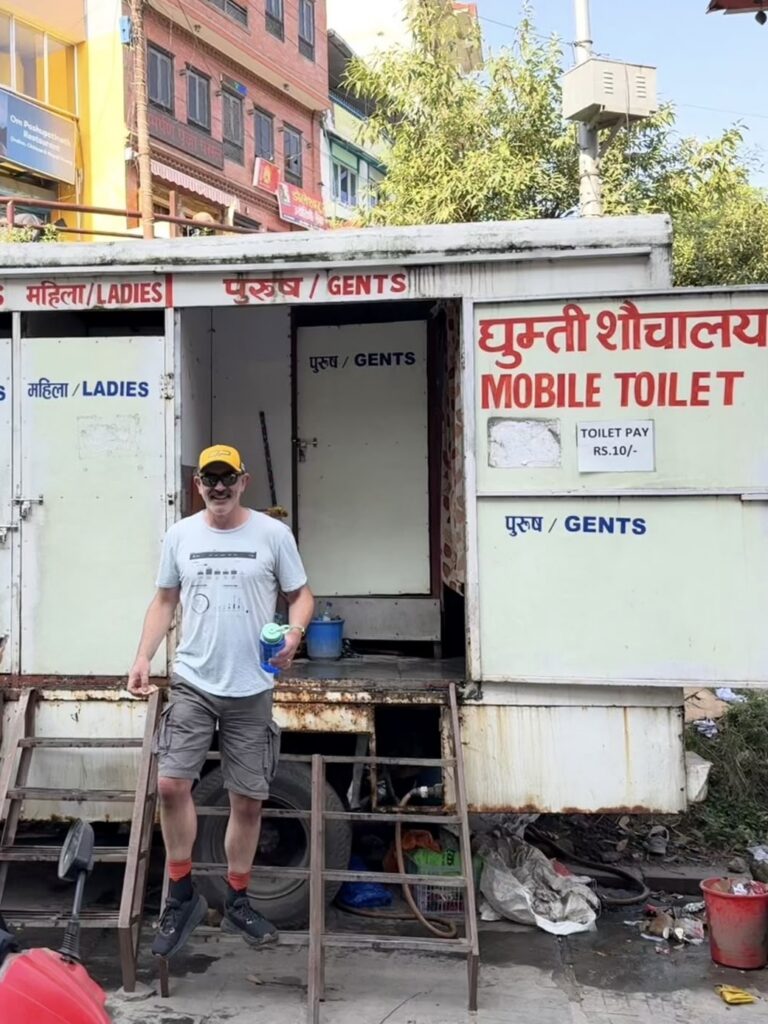
Tim, one of our four-man Tasmanian contingent, was a very funny unit.
Fit, musically inclined and blessed with razor-sharp wit, Tim also bears an uncanny resemblance to Hollywood legend Tom Selleck. With his unmistakable moustache – a bygone product of the 70s – it felt a bit like we had Magnum, P.I. himself trekking through the Himalayas with us!
Tim also introduced one of the expedition’s great cultural initiatives – the “Top 5 Albums” challenge.
Every member was invited to nominate their five favourite albums for collective review.
There were some outstanding selections, a few surprises and some absolute shockers.
Nick “Nitro” Nordern’s musical taste came under particularly scrutiny 😳
The challenge provided endless discussion, debate and laughter, especially once Duncan decided ChatGPT should have the final say on everyone’s musical credibility.
Tim was also one half of what should have been a formidable 500 card-playing partnership with Dazzler.
I know we’ve already touched on this but it’s worth highlighting again they were comprehensively outplayed by one total newcomer to the game and yours truly who hadn’t played a game of 500 for at least 10 years.
But Tim’s contribution to expedition entertainment didn’t end with music and cards.
Our final night in Kote turned into a particularly memorable evening at the local pool hall, where a few games of pool, plenty of refreshments and some enthusiastic interpretations of the rules provided no shortage of laughs.
And then there was the infamous pants-down lap.
Aussies know only too well what happens when you fail to pot a single ball.
So true to the rules, down came the trousers and a lap of the table was duly completed.
An unforgettable performance, and one that I’m sure Tim would have preferred to leave behind in the Himalayas.
Between the musical debates, card-playing disappointments and his now-legendary pool hall performance, Tim provided no shortage of entertainment throughout the expedition.
A terrific character, a wonderful team member and someone whose contribution to the camaraderie of this trip will be remembered for a very long time.
Ian and Vaughan Cruickshank – Tassie Toughness
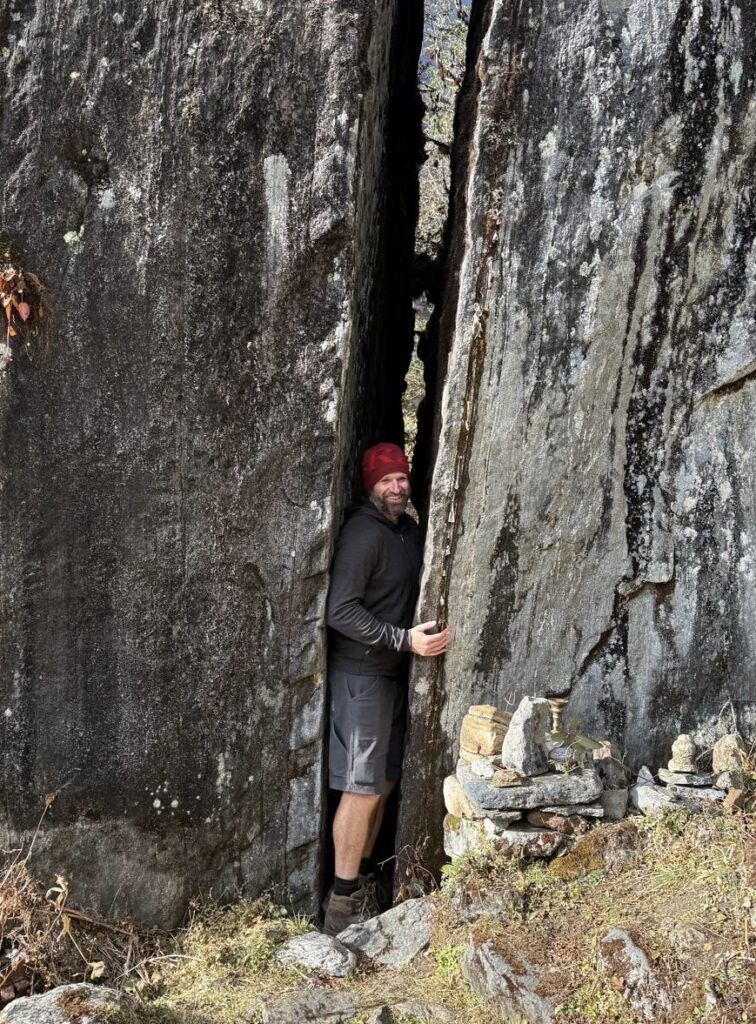
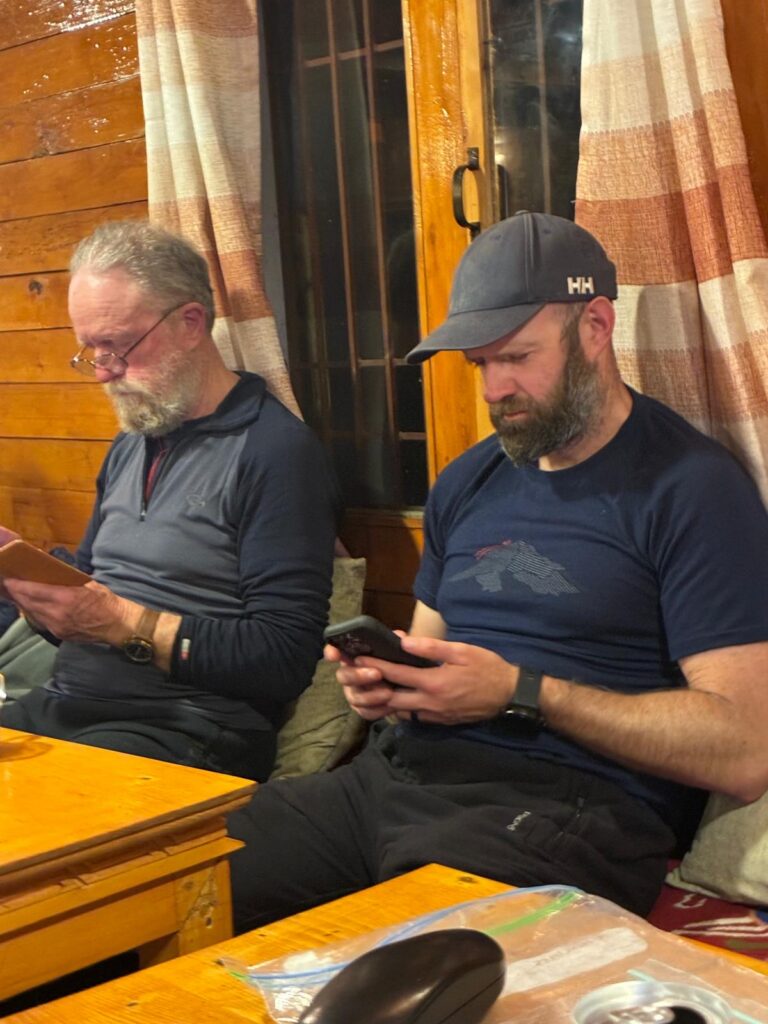
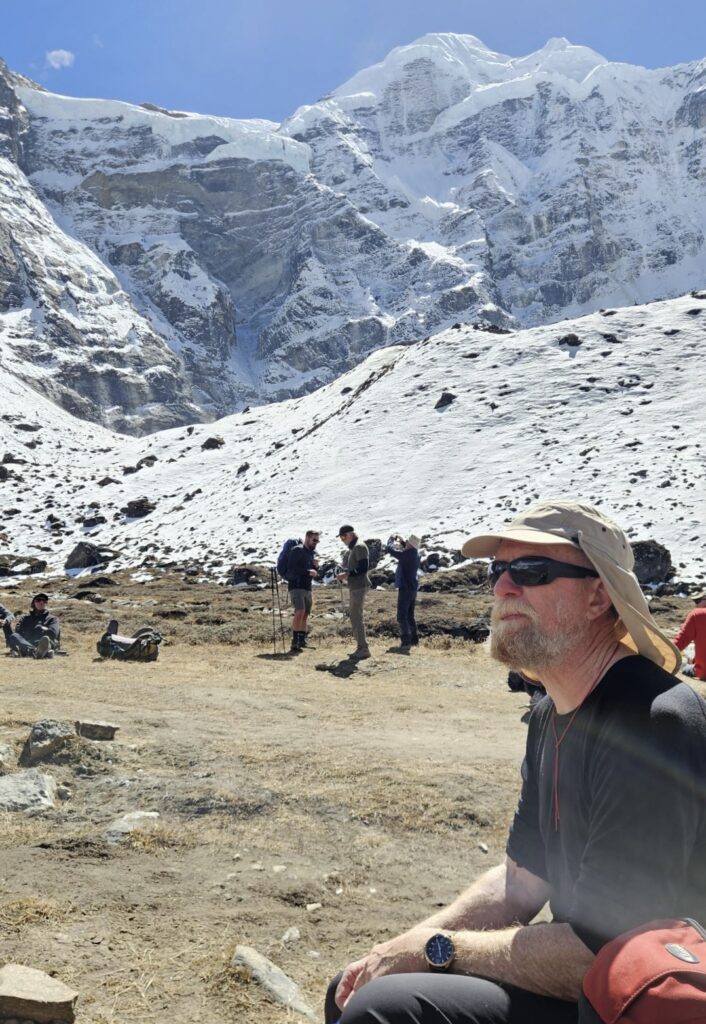
Our second father-and-son combination, Ian and Vaughan Cruickshank, were another highlight of the expedition.
Ian’s strength, fitness and endurance were simply remarkable, particularly given his age.
And what made his performance even more impressive was that he was carrying a calf injury for the second half of the expedition.
While others might have used that as a perfectly reasonable excuse to slow down or complain, Ian simply soldiered on.
Day after day, through demanding climbs, long descents and increasingly challenging conditions, he just kept putting one foot in front of the other.
No fuss. No complaints. Just good old-fashioned Tassie toughness.
But Ian’s contribution extended well beyond his impressive physical resilience.
He was also a fascinating storyteller, with a lifetime of experiences growing up in Tasmania and some extraordinary exploits along the way.
Whether we were relaxing in a lodge after a long day’s trekking or sharing a meal around the table, Ian always seemed to have another remarkable story to tell.
And the best part was that they weren’t stories he’d read somewhere – he’d actually lived them.
His son Vaughan was unquestionably one of the fittest members of the entire team.
A seasoned bushwalker and hiker, Vaughan was completely at home in the mountains and would undoubtedly have been among the strongest contenders to reach the summit had conditions allowed.
But perhaps Vaughan’s finest contribution came not from his physical ability, but from his willingness to look after others.
On our final long day returning to Kote, the team had become spread out along the trail, with several members still making their way down as darkness fell.
Vaughan, who had arrived well ahead of the others, could quite easily have settled into the warmth and comfort of the lodge after an exhausting day.
Instead, recognising that some of the late arrivals would be struggling to navigate in the dark, he gathered a collection of head torches and headed back up the trail.
And not just a short distance.
Vaughan walked a significant way back into the darkness to meet the approaching trekkers and distribute the torches to those who needed them.
It was an entirely selfless gesture, made at precisely the time when it mattered most.
No fanfare, no expectation of recognition. He simply saw that his teammates needed some help and went out of his way to provide it.
That moment said an enormous amount about Vaughan’s character.
Being exceptionally fit and strong is one thing. Using that strength to help others when they’re tired, vulnerable and in need of assistance is something far more special.
And that’s exactly what Vaughan did.
Together, Ian and Vaughan also provided plenty of laughs, particularly when it came to shared accommodation, sleeping arrangements and the inevitable father-and-son snoring accusations!
Two terrific blokes who brought strength, resilience, humour and genuine generosity to the expedition.
Ian showed us what determination looks like when things get tough. Vaughan showed us what true team spirit looks like when others need a hand.
A wonderful father-and-son combination, and two people I was particularly grateful to have had on our team.
Ray Foster – The Smartest Man on the Mountain?
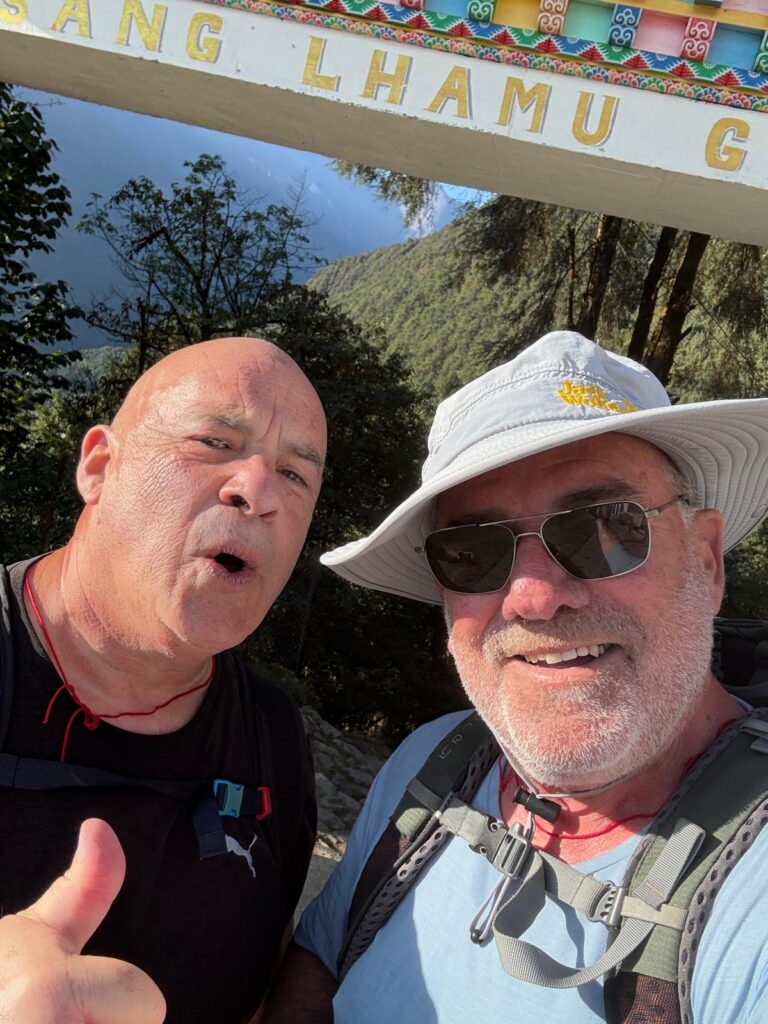

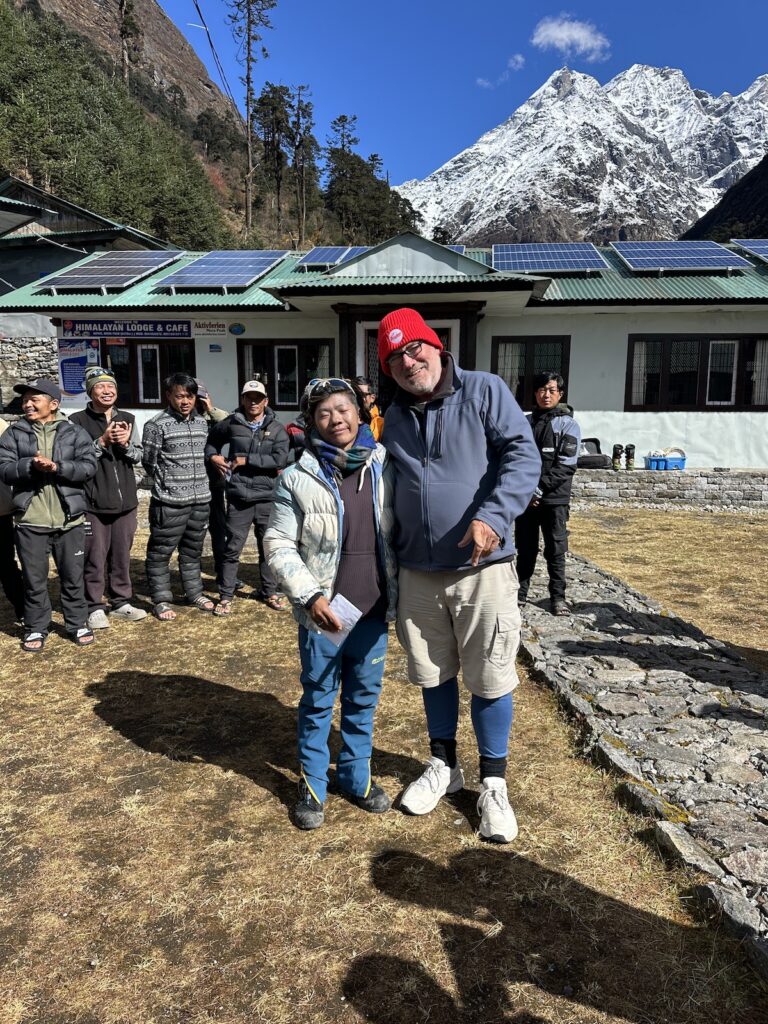
My longtime friend Ray Foster, a two-time Mera Peak summiteer, joined us primarily to enjoy the trekking, the spectacular Himalayan scenery and, of course, the company.
Having already stood on top of Mera Peak twice, Ray had nothing to prove. He knew exactly what lay ahead, understood the challenges of high-altitude trekking and was more than happy to enjoy the journey without the pressure of reaching the summit.
When he joined our expedition WhatsApp group, I suggested that with his experience, he could perhaps take on the role of assistant guide.
His response?
“God help them.”
Classic Ray.
Ray has always had a wonderfully dry sense of humour, and his ability to deliver a perfectly timed comment with a straight face made him a terrific addition to the group.
Unfortunately, a tumble along the trail meant Ray had to adjust his plans. Thankfully, he recovered well, although his ambitions for the remainder of the expedition became somewhat more modest.
And then, somehow, Ray managed to secure himself a helicopter flight from Tuli Kharka to Kote.
While the rest of us spent approximately eight hours slogging over demanding mountain terrain, tackling steep descents and working hard for every kilometre, Ray completed the same journey in around six minutes.
Eight hours versus six minutes.
I suspect Ray was already enjoying a cup of tea by the time the rest of us had barely made a dent in the day’s trekking.
And while we were subsequently snowbound at Khare, battling freezing temperatures, deep snow and the growing realisation that our summit ambitions were slipping away, Ray was comfortably settled at the considerably more agreeable altitude of Kote.
There he could enjoy the relative warmth, a more relaxed pace and, importantly, the daily supply of freshly baked banana bread and brownies.
Not a bad alternative to digging your way through two metres of Himalayan snow!
Of course, Ray kept in touch with our progress, and it was reassuring to know that he was safe and comfortable lower down the mountain while we worked through the challenges unfolding above.
Having shared many adventures and plenty of laughs with Ray over the years, it was wonderful to have him along again. His experience, easygoing nature and dry humour added enormously to the character of the expedition.
And in hindsight, perhaps the smartest bloke on the entire trip was the one who had already climbed Mera Peak twice, knew exactly what was involved, and decided that a helicopter ride, a comfortable lodge and a steady supply of banana bread and brownies sounded like a perfectly sensible alternative.
Two Mera Peak summits already in the bag, eight hours of trekking reduced to six minutes, and not a snow shovel in sight.
Well played, Ray.
Phil “Edgey” Edge – The Coldest Man in Nepal
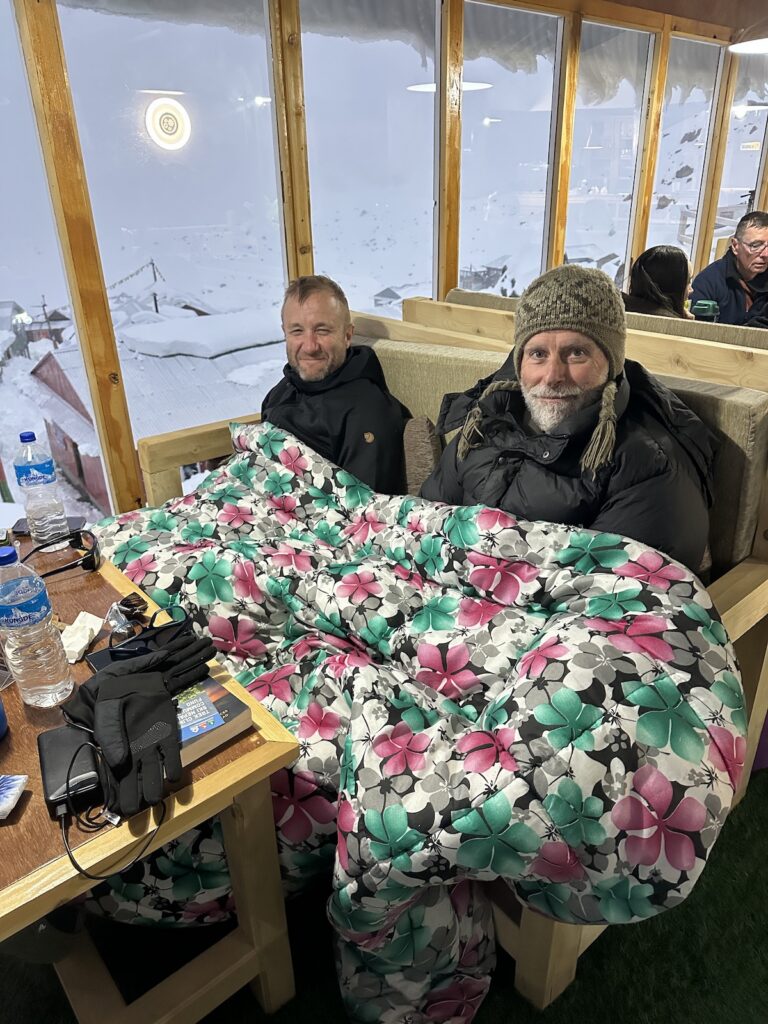
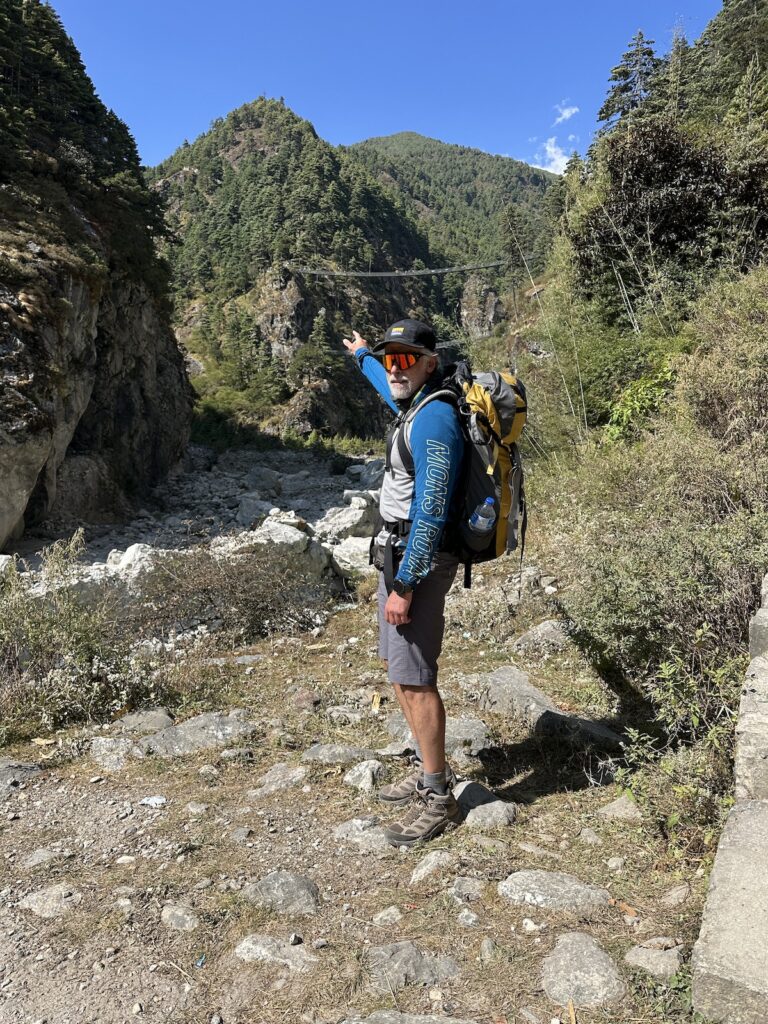
My good mate Edgey was another solid contributor.
Super fit, great company and always ready for a laugh, Edgey had just one small problem.
He was permanently cold. Yep, for pretty well the whole time.
Even inside a lodge, wearing seemingly every piece of clothing he’d brought with him, Edgey would still be cold.
To be fair, he’d warned us from the beginning.
In fact, months before departure, he was already organising a group discount on heated socks, eventually negotiating a very respectable 20% discount for the team.
When we finally had to retreat from Khare through the snow, I lent Edgey my trusty Everest down jacket to help him cope with the conditions.
Within about 30 minutes, the man who’d spent the entire expedition trying to get warm was overheating!
Apparently, there is such a thing as being too warm.
His other great passion was shopping.
Whether in Namche, Lukla or Kathmandu, if there was something for sale, Edgey was invariably investigating it.
Never mind the extra weight, his determination to support the Nepalese economy had no limit.
But Edgey’s shopping enthusiasm was about to face an unexpected test.
Duncan had organised some terrific Mera Peak expedition T-shirts for everyone, beautifully designed and manufactured in Kathmandu while we were away trekking.
On our return, everyone happily purchased their shirt as a memento of the expedition, despite the fact that none of us had reached the summit.
Everyone, that is, except Edgey.
Yes, the man who’d spent much of the expedition shopping his way through Nepal suddenly developed an extraordinary level of purchasing restraint.
His reasoning?
He hadn’t summited Mera Peak, so he wasn’t buying the Mera Peak T-shirt.
Of all the people to take such a principled stand against purchasing expedition merchandise. Apparently, there are some things even the most prolific shopper in Nepal won’t buy.
Andrew Humphreys – The Walking First Aid Kit
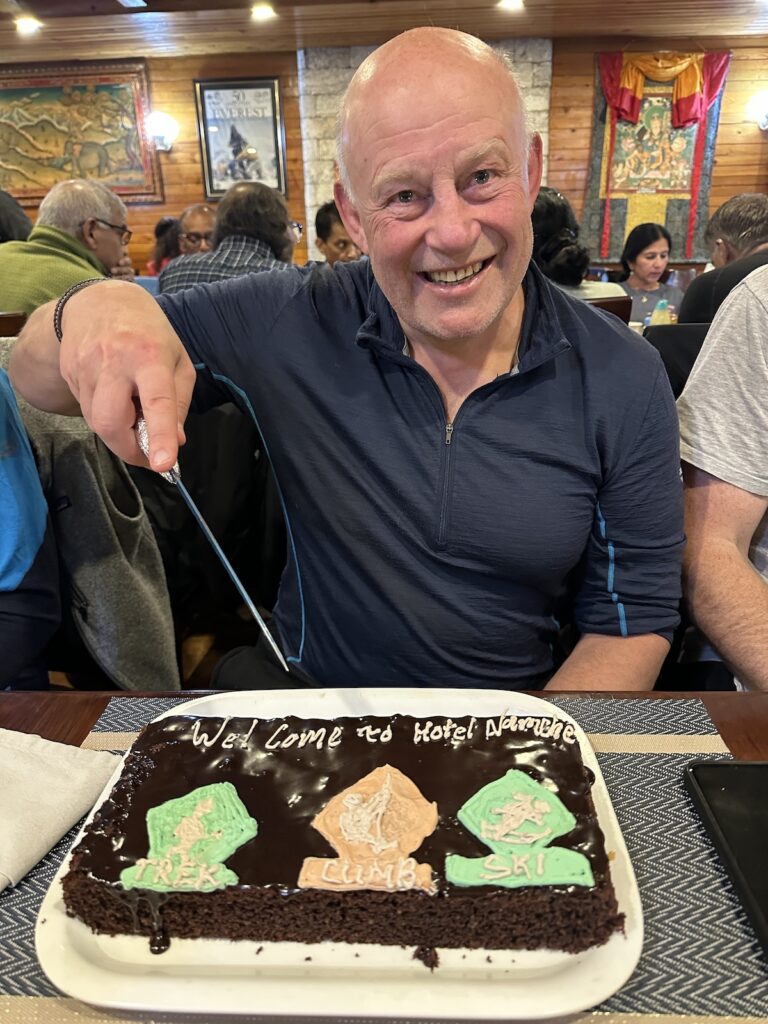
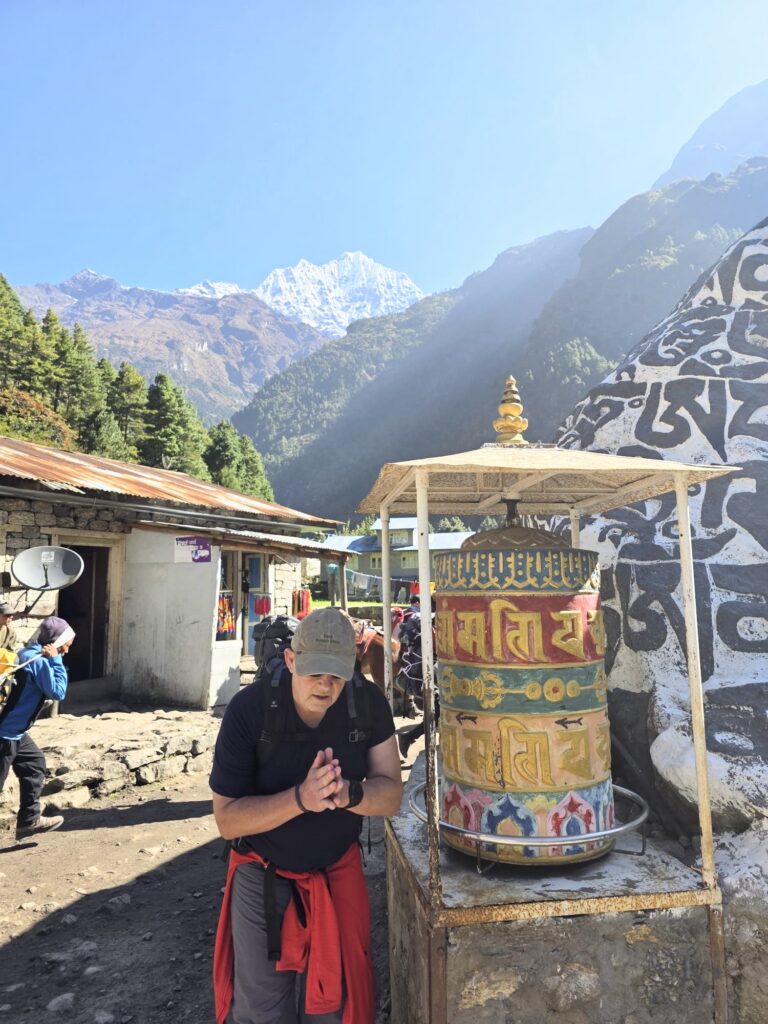
One of our two token Poms, Andrew “Andy” Humphreys, was another unique character who kept us entertained throughout the expedition.
Andy seemed to possess a remarkable ability to find himself in situations requiring medical attention. Fortunately, we had an Australian nurse, Phil Blair, travelling with us.
Whether it was another minor injury, an unexpected knock or something else needing a little attention, Andy certainly made sure Phil’s medical skills didn’t go to waste.
Even our helicopter journey back to Kathmandu wasn’t without incident.
As Andy was boarding the helicopter, he managed to hit his head, adding yet another entry to his growing list of expedition mishaps.
You really couldn’t make it up!
By November the 2nd, Andy had clearly become accustomed to having his own personal medical service on call.
He sent Phil a WhatsApp message:
Andy: “Hi Blairey. What time does the surgery open?”
Phil: “All consults at the pool bar for remainder of trip Andrew.”
Through it all, Andy maintained his good humour and was always ready for a good laugh.
A terrific travelling companion whose adventures provided plenty of laughs, even if he did keep our resident nurse rather busy!
Phil Blair – The Expedition’s Resident Nurse
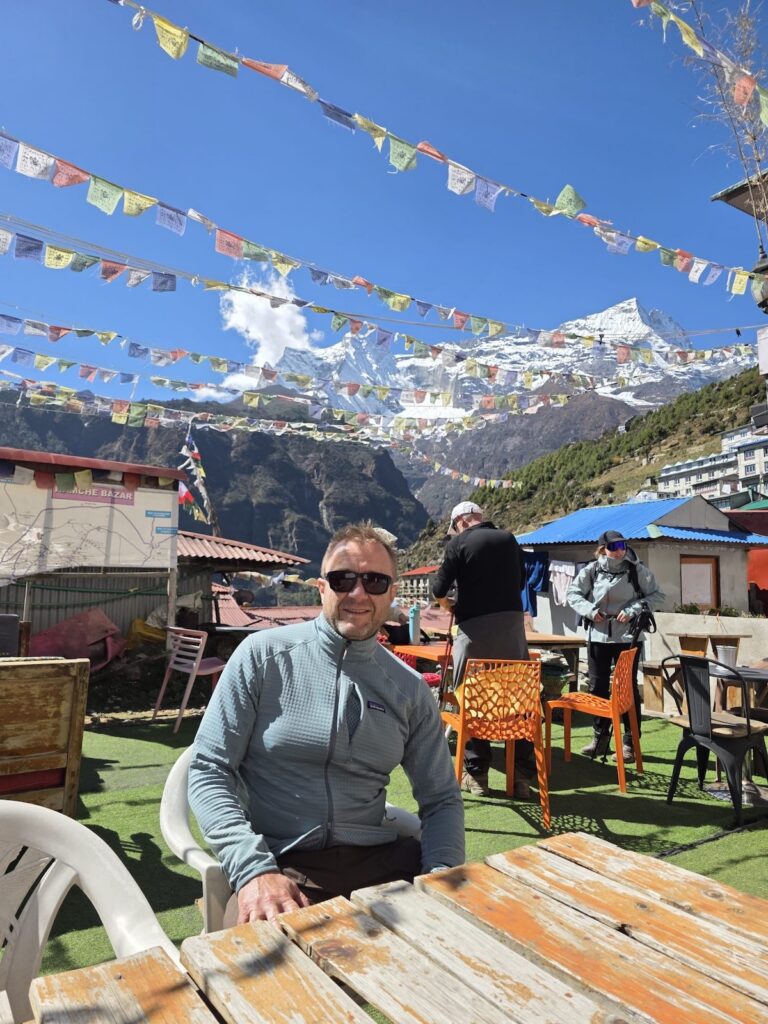
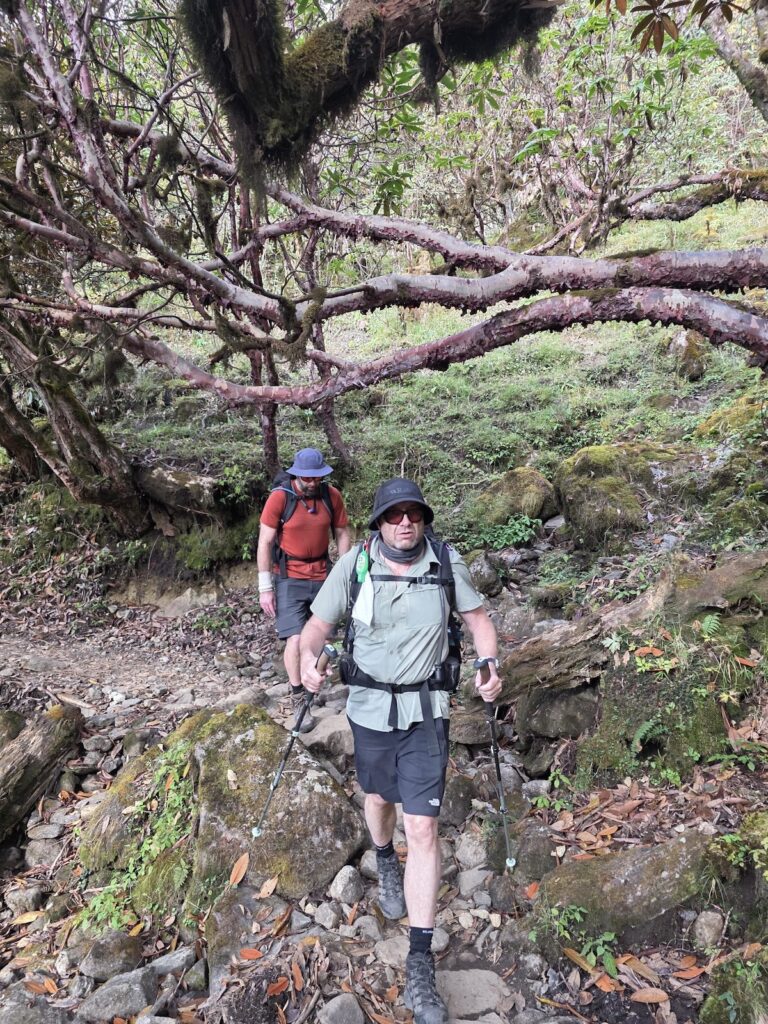
Every expedition benefits from having someone with medical experience in the group, and we were fortunate to have Australian nurse Phil Blair travelling with us.
What Phil probably hadn’t anticipated was just how frequently his services might be called upon, particularly by one certain Englishman! So much so that we really should have put Phil on the books.
With Andy providing a seemingly endless stream of minor medical dramas, Phil found himself operating something resembling an unofficial expedition clinic.
To his credit, he handled it all with good humour, patience and the occasional perfectly timed response.
His declaration that all future consultations would take place at the pool bar was a particularly popular development in expedition healthcare.
Of course, Phil’s talents extended beyond looking after his fellow trekkers.
He also demonstrated a keen eye for a winning horse, taking out the Melbourne Cup sweep organised by Duncan Young.
While the rest of us were occupied with mountains, snowstorms and the disappointment of missing the summit, Phil at least managed to return home with a victory to his name.
A great bloke to have along, Phil brought a reassuring presence, a terrific sense of humour and a willingness to help whenever needed.
Ted Malden – The Man, The Myth, The White Slippers
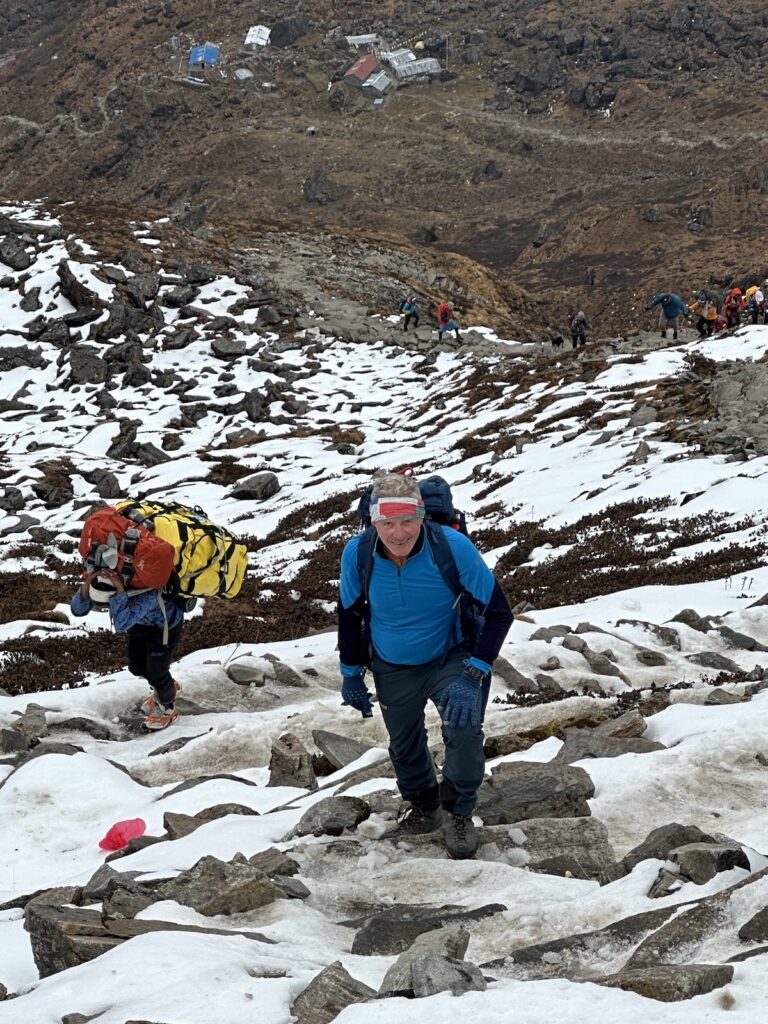
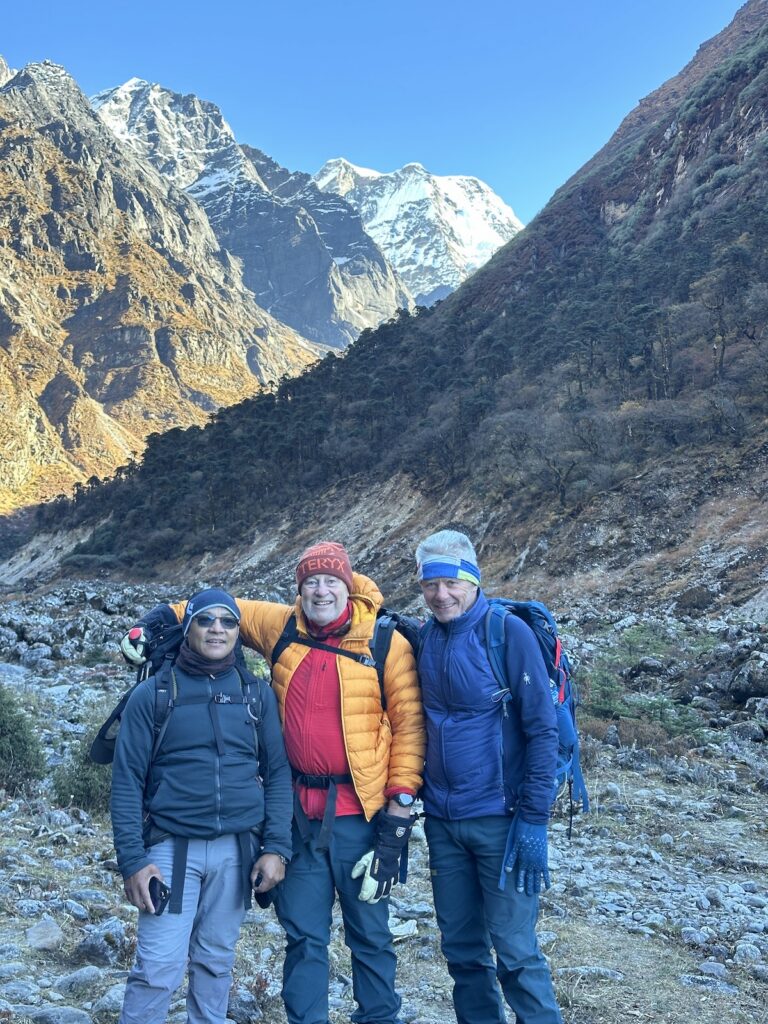
Our other token Pom, Ted Malden, was a character.
Incredibly fit, a keen cyclist and an experienced adventurer, Ted had rearranged his cycling plans in South America to join us on Mera Peak.
Whether he considered that a wise decision after the mountain was closed by snow is another question entirely.
Ted was terrific company, always ready with an interesting story, a witty observation or a good laugh.
But his greatest contribution to expedition folklore came after our return to Kathmandu.
Once settled into the Dusit Princess Hotel, Ted discovered the complimentary white hotel slippers.
And a legend was born.
From that moment on, you were hard-pressed to find Ted wearing anything else on his feet.
Breakfast, dinner, wandering around the hotel – the white slippers were front and centre.
Even an unfortunate encounter with some curry, which left a rather impressive brown stain across one slipper, wasn’t enough to persuade him to retire his beloved footwear.
I’ve seen plenty of interesting fashion statements on expeditions over the years, but nobody has ever rocked a pair of white hotel slippers quite like Ted.
And true to the myth, we’re unable to locate any photographic evidence of said slippers.
Paul (Schu) Schumacher – The Mountain Mechanic With Unfinished Business
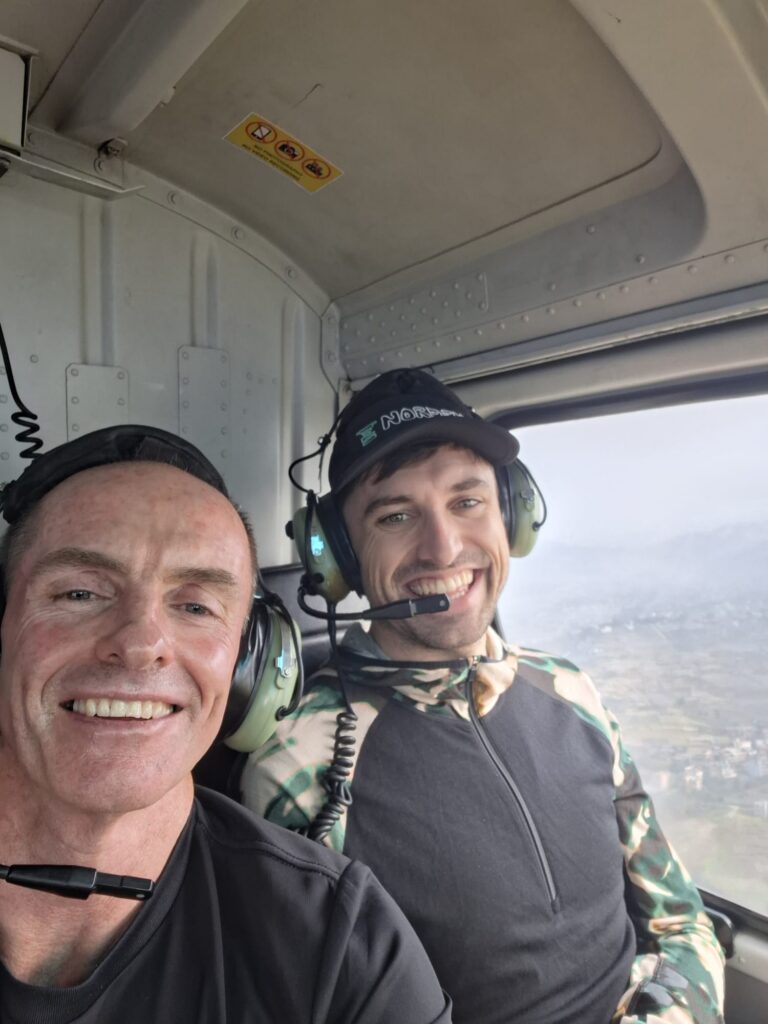
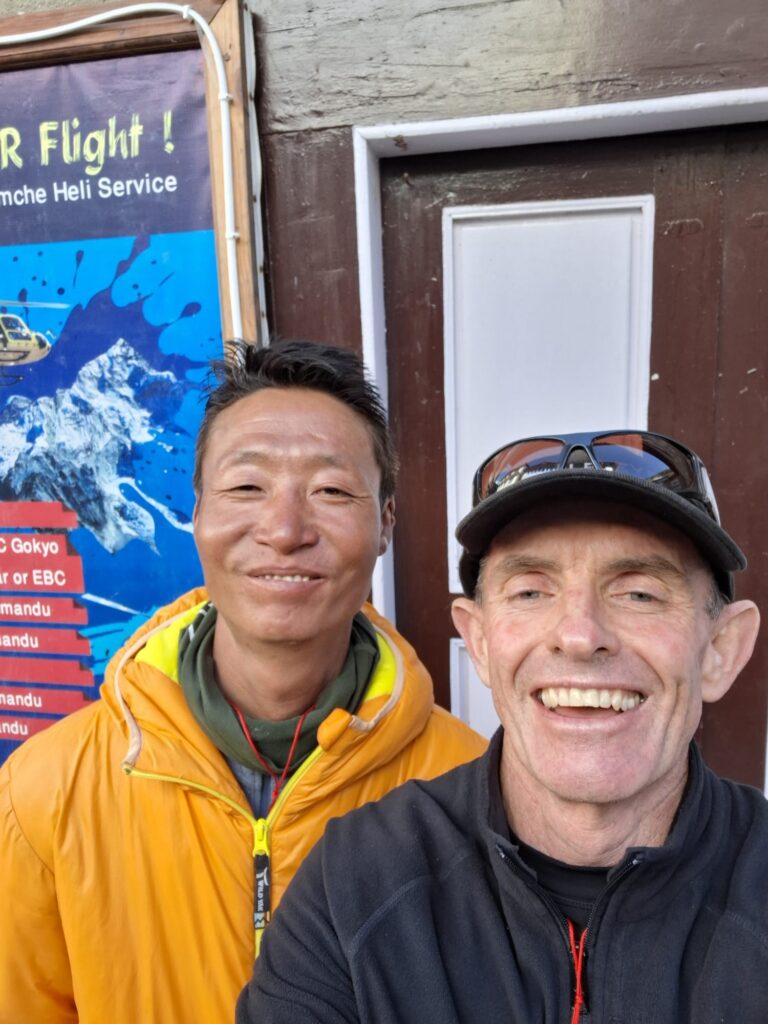
Paul was the very first person to express his commitment to our Mera Peak Expedition, and from the outset, there was no doubting his enthusiasm.
Fit as a mallee bull, Paul was invariably up the front of the group.
A true country boy who’d spent much of his working life in the mines and underground, he brought an extraordinary amount of mechanical and engineering knowledge to the expedition.
There wasn’t much Paul couldn’t work out, fix or improve.
He frequently came up with ingenious solutions to some of the more traditional Nepalese ways of doing things.
Whether anyone was actually going to adopt his suggestions was another matter.
His technical curiosity extended well beyond the trail.
Following news of a helicopter collision near Pheriche, Paul investigated the aircraft involved and identified what appeared to be a connection with helicopter registration 9N-AJR, the aircraft he believed had flown our team into Lukla on the 19th of October.
A sobering possibility, and typical of Paul’s extraordinary attention to detail.
But underneath all that engineering expertise lies Paul’s greatest passion – skiing.
Paul was one of six members hoping to ski from the summit of Mera Peak.
When the weather ended those ambitions, he wasn’t about to leave the Himalayas without putting his skis on.
On our retreat from Khare, Paul joined the small skiing contingent that managed to ski almost halfway down towards Tangnag.
It certainly wasn’t without its challenges, but at least he managed some Himalayan turns!
And perhaps what impressed me most was his reaction when it became clear we wouldn’t be summiting.
While the rest of us were coming to terms with the disappointment, Paul was already putting his hand up to return next year.
No hesitation. No second thoughts.
We haven’t even opened bookings for our next Mera Peak expedition, but I have absolutely no doubt that Paul will be among the first to sign up.
When Paul says he’s going to do something, you can be pretty confident he’ll follow through.
For Paul, Mera Peak isn’t a missed opportunity.
It’s unfinished business.
Duncan Young – The Minister for AI, WhatsApp and International Relations
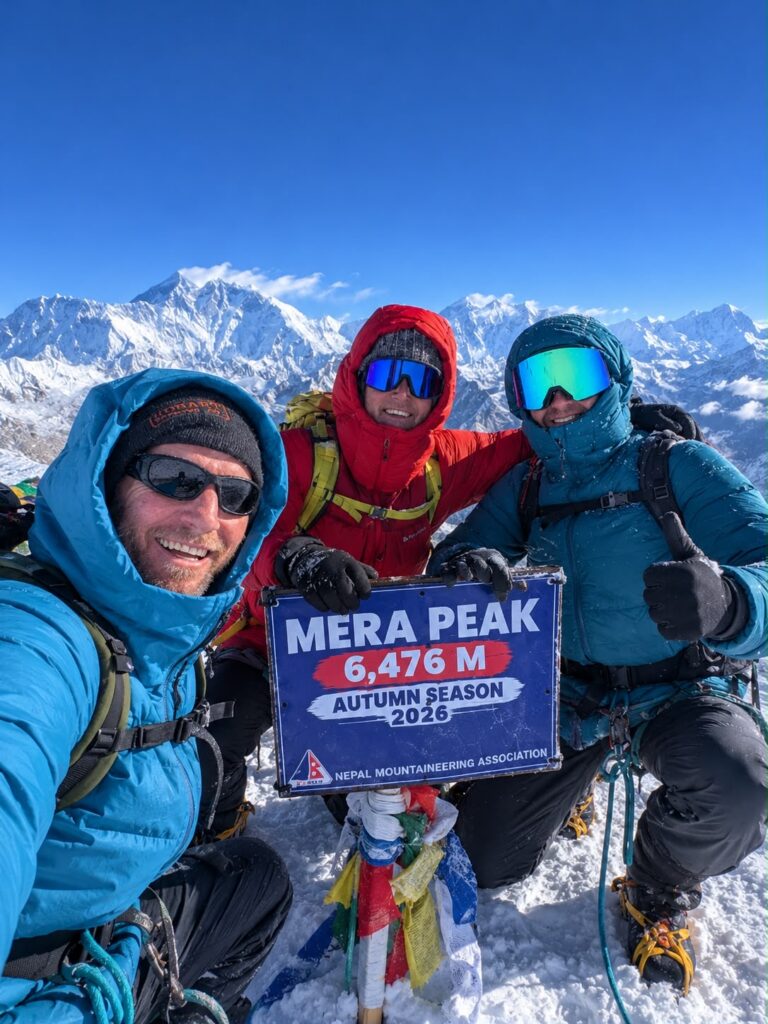
Every expedition needs a Duncan Young.
Hands down the funniest bloke on the trip, Duncan had an extraordinary ability to keep everyone laughing, day after day, regardless of the conditions, the challenges or how tired we might have been.
Duncan also had an AI solution for absolutely everything.
He was our unofficial WhatsApp administrator, expedition merchandise coordinator, musical adjudicator, digital archivist and, eventually, international diplomatic representative.
If there was a situation that required communication, Duncan had probably already created another WhatsApp group for it.
He organised our expedition T-shirts in Kathmandu, established a shared photo and video library, and used AI to analyse and rank everyone’s Top 5 Albums.
There were winners, losers and some seriously bruised musical egos.
Then there was his unexpected appointment as our liaison officer with a rather colourful Czech expedition we encountered while snowbound at Khare.
Their larger-than-life leader, Pavel, provided no shortage of entertainment, and Duncan quickly established a close relationship with him.
Apparently, if Trek Climb Ski Nepal ever decides to launch a Czech-style reality television adventure tour, Duncan already has the necessary contacts.
While we were snowbound in Khare, Duncan also found time to investigate the golfing opportunities awaiting him in Kathmandu, researching courses, equipment and everything else he might need.
Clearly, he was planning ahead for life after the mountains.
Duncan also organised our Mera Peak Melbourne Cup sweep, ensuring that even in Kathmandu, the race that stops a nation wasn’t forgotten.
And in a rather fitting outcome, the winner was none other than Phil Blair, our unofficial expedition nurse, who’d spent much of the trip attending to Andy’s seemingly endless medical requirements.
If anyone deserved a reward for services rendered, it was Phil!
Duncan also managed to produce one of the funniest photographs of the entire expedition, alongside Lakpa Sherpa (see above).
A brilliant piece of humour, but also a wonderful reminder of just how extraordinary Lakpa’s achievements really are.
But Duncan’s crowning achievement came after it became clear that none of us would be reaching the summit.
While the rest of us reluctantly accepted that the mountain had beaten us, Duncan simply turned to artificial intelligence.
With a little technological wizardry, he produced a remarkably convincing photograph of himself standing triumphantly on the summit of Mera Peak, having superimposed his face into a photograph of another expedition.
So, despite 15 incredibly fit and determined expedition members being denied the summit by a week-long mountain closure, Duncan Young somehow became the only member of our team to reach the top.
The Summit We Didn’t Reach – And the Memories We Brought Home
As an expedition leader, it’s always disappointing to turn around before reaching the summit, particularly when you know the team has the ability to succeed.
This one was especially frustrating.
We had the fitness. We had the experience. We’d acclimatised exceptionally well. We had a remarkable Nepalese support team and a group of people who genuinely wanted to be there.
What we didn’t have was a window of safe weather.
And in the mountains, that’s something you simply can’t control.
But reflecting on the expedition, I keep coming back to the people.
The laughter in the lodges. The card games. The endless debates about music. The heated socks. The shopping expeditions. The medical consultations. The Czech neighbours. The Melbourne Cup sweep. The skiing adventures.
Those extraordinary helicopter flights, with Everest and Mera Peak dominating the horizon.
And, of course, Duncan’s remarkable AI-assisted summit.
Then there was Lakpa, forging a path through deep snow while several other expeditions followed in our wake – a moment that reminded me why I have so much respect for the extraordinary Nepalese people who work in these mountains.
These are the memories that will stay with all of us.
To every member of our Mera Peak expedition team, thank you for your trust, your preparation, your determination and, above all, your extraordinary attitude when things didn’t go our way.
Not once did Tika, Lakpa or I doubt the capability of this group, and we couldn’t have asked for a better bunch of people to share the experience with.
Mountains will always be there. Opportunities to climb them will come again.
But the friendships, laughter and shared experiences of an expedition like this are special.
We didn’t stand on the summit of Mera Peak this time, but every single member of this team should be incredibly proud of what they achieved.
The mountain won this round. But everyone came home safely, with plenty of stories to tell. And that, ultimately, is what matters most.
As always, Mera Peak hasn’t heard the last of us.
Nick Farr
Mera Peak Expedition Leader | Trek Climb Ski Nepal
November 2026