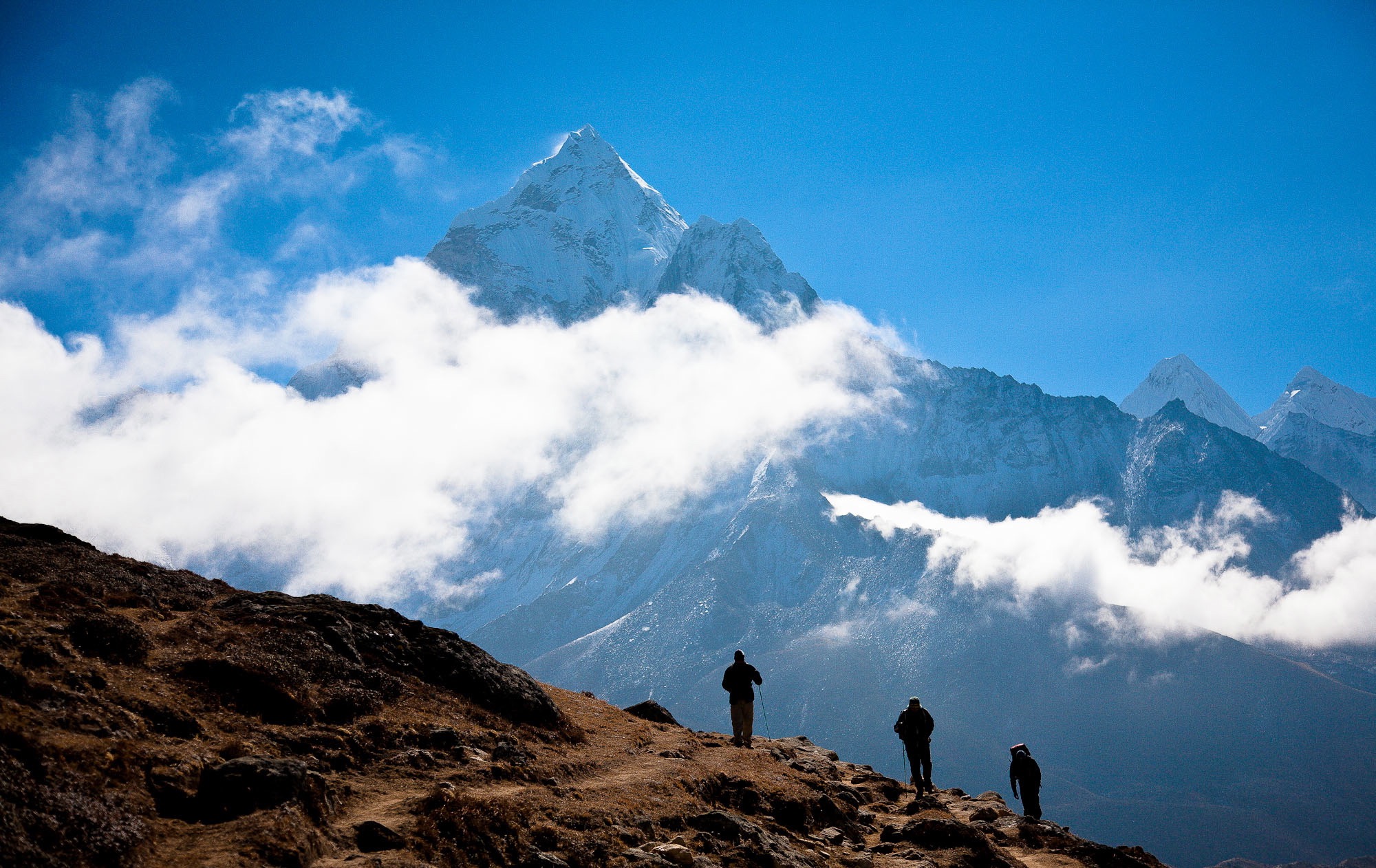
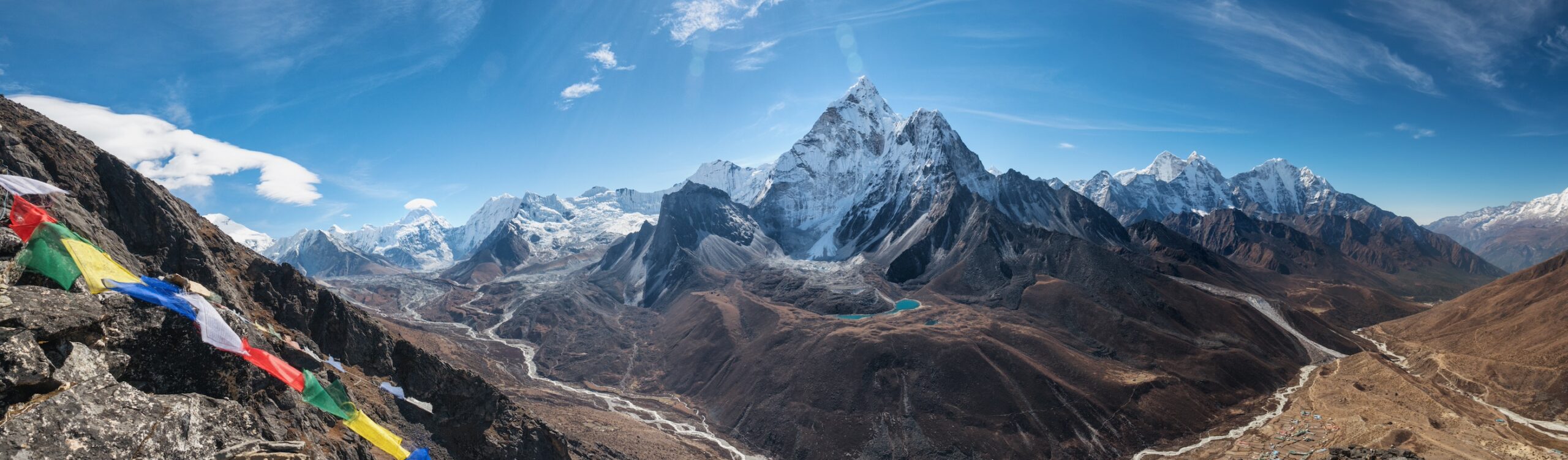
Choosing the best time of year for Everest Base Camp trekking can make the difference between a challenging but unforgettable adventure and a frustrating experience shaped by weather, crowds or poor visibility.
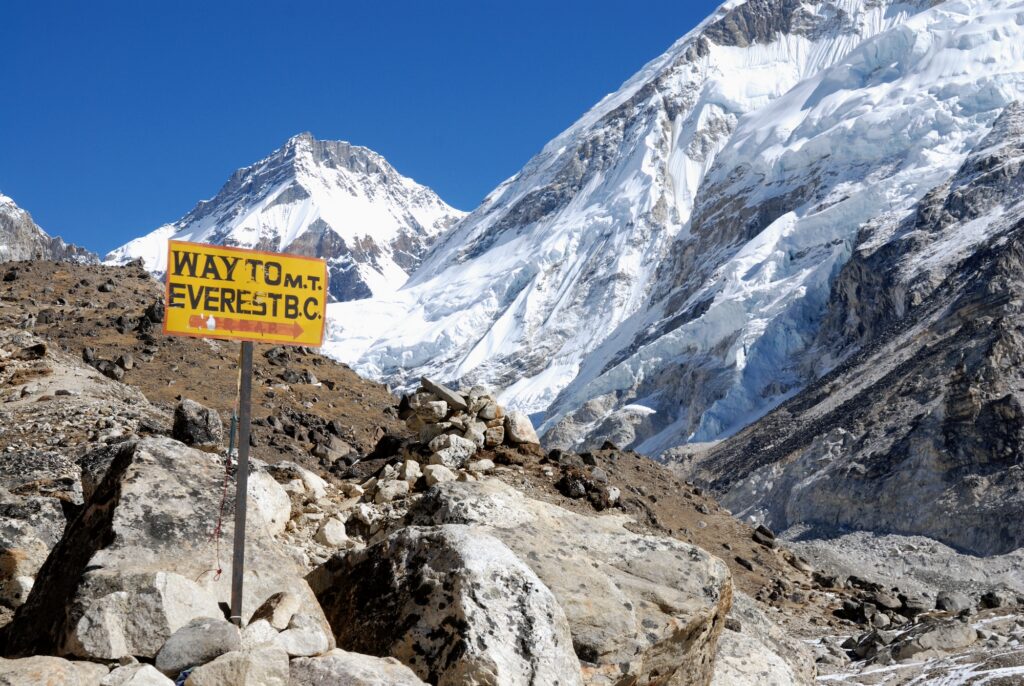
The Everest Base Camp trek is one of the world’s most iconic journeys. However, the Himalaya is a serious mountain environment, and timing matters. Each season brings its own conditions, advantages and trade-offs. Understanding these differences allows you to match the trek to your expectations, fitness and appetite for challenge.
Below, we break down each trekking season so you can decide when Everest Base Camp is right for you.
Understanding Everest Base Camp Seasons
Everest Base Camp lies within the Khumbu region of Nepal at around 5,364 metres. The trekking seasons are shaped by monsoon patterns, winter systems and shoulder-season transitions.
Broadly speaking, there are four trekking seasons:
- Spring (March to May)
- Summer / Monsoon (June to August)
- Autumn (September to November)
- Winter (December to February)
While trekking is technically possible year-round, not all seasons offer the same experience.
Spring (March to May): The Most Popular Time
For many trekkers, spring is considered the best time of year for Everest Base Camp trekking.
As winter releases its grip, temperatures gradually warm, trails reopen and the region comes alive. Rhododendron forests bloom at lower elevations, while the higher mountains remain snow-covered and dramatic.

Why spring works so well
- Stable weather with relatively low precipitation
- Clear mornings with excellent mountain views
- Comfortable daytime temperatures for trekking
- A lively atmosphere as climbers prepare for Everest summits
Spring also coincides with the Everest climbing season, which adds a unique buzz to the trek. Reaching Everest Base Camp during this period often means seeing expedition teams, icefall preparations and a genuine sense of history unfolding.
The main downside is popularity. Trails and teahouses are busy, particularly in April and early May, so booking early is essential.
Autumn (September to November): Clear Skies and Crisp Air
Autumn rivals spring as the best time of year for Everest Base Camp trekking, especially for trekkers who prioritise visibility and stability.
After the monsoon clears, the air becomes exceptionally clean. Mountain views are often at their sharpest, and daytime conditions are ideal for long walking days.
Key advantages of autumn
- Exceptional clarity and panoramic views
- Dry trails and reliable weather windows
- Cooler nights but comfortable trekking conditions
- Festive atmosphere during the Nepali holiday season
October is widely regarded as the prime month. However, November is also excellent, particularly for those wanting fewer crowds that don’t mind colder evenings.
Autumn does get busy, though generally it feels slightly less intense than spring.
Summer / Monsoon (June to August): The Quiet Season
Summer is often overlooked when discussing the best time of year for Everest Base Camp trekking, but it does have its place.
This is monsoon season in Nepal. Rainfall is heavier at lower elevations, flights to Lukla can be disrupted and trails can be muddy. However, the upper Khumbu region receives less rain than much of the country.
Why some trekkers still choose summer
- Very quiet trails and teahouses
- Lush landscapes and dramatic cloud formations
- Warmer temperatures at altitude
- A more remote, introspective experience
That said, views are less reliable and flexibility is essential. This season suits experienced trekkers, photographers seeking moody conditions or those prioritising solitude over certainty.
Winter (December to February): Cold but Rewarding
Winter trekking is possible, but it’s the most demanding option when considering the best time of year for Everest Base Camp trekking.
Temperatures at night can drop well below freezing, and heavy snow may block higher passes or shorten itineraries. However, days are often clear and the sense of isolation is unmatched.
Winter trekking highlights
- Very quiet trails
- Clear skies after snowfalls
- A raw, high-mountain atmosphere
- Fewer flight delays than monsoon season
Winter is best suited to confident trekkers who are well prepared for cold conditions and shorter daylight hours.
Comparing Spring and Autumn
If you’re choosing between the two prime seasons, here’s a simple guide:
- Choose spring if you want warmer conditions, alpine flowers and Everest climbing activity
- Choose autumn if you want crisp air, maximum visibility and slightly fewer crowds
Both seasons represent the best time of year for Everest Base Camp trekking, and you won’t go wrong with either.
🎥 Watch videos from our spring and autumn Everest Base Camp expeditions
What About Crowds?
Crowds are an unavoidable factor when trekking to one of the world’s most famous destinations. However, smart itinerary design can make a huge difference.
Starting early in the season, allowing extra acclimatisation days, or choosing alternative routes such as Gokyo Lakes before Everest Base Camp can significantly improve the experience without changing the season.

Final Thoughts
There is no single perfect answer to the question of the best time of year for Everest Base Camp trekking. Instead, the best time depends on what you value most.
- For balance and reliability, choose spring or autumn
- For solitude and atmosphere, consider winter or monsoon
- For first-time trekkers, April, May or October are ideal
When matched with the right preparation, pacing and support, Everest Base Camp delivers a powerful experience in every season.